City Guide
Kuala Lumpur is one of the most underrated workation cities in Southeast Asia. It has fast internet, modern apartments and hotels with pools and gyms, excellent food from Malay, Chinese and Indian kitchens, and prices well below Europe.
Best for
Remote workers who want city comfort, fast internet and great food
Best months
May to July, and December to February
Time difference with CET
+7 hours in winter, +6 hours in summer
Cost per day
Roughly €50–€100 including a good hotel or serviced apartment
Internet
Fast and reliable, one of the city's strongest points
Less suited if you want a walkable city or a beach on your doorstep. KL is hot, spread out and built around malls, towers and ring roads.
Internet is one of KL's strongest points. Internet in Malaysia is fast, and mobile internet is among the fastest in the world. Hotels, serviced apartments, malls and coworking spaces are well connected.
An eSIM or local SIM gives you cheap, fast mobile data from arrival, and you can share it with your laptop as a backup during calls. Read my guide to eSIMs for workations.
WORQ
A Malaysian coworking brand with many locations. Day passes from RM50 (about €11) at locations like Bangsar and KL Gateway, and around RM60 at KL Sentral.
Common Ground
Stylish spaces across KL, including Bukit Bintang and Damansara Heights. Day passes from around RM50 (about €11).
Colony
Design-led coworking and coliving, with day passes from about RM60 (about €13).
Komune
A community-focused space with day passes from about RM35 (about €7.50).
KL's air-conditioned malls and cafés, especially in Bangsar and around KLCC, are also good places to work for a few hours.
Bukit Bintang and KLCC
The central shopping and entertainment district, with malls, rooftop bars and the Petronas Towers. Many hotels and serviced apartments with pools and gyms.
Bangsar
Popular with young expats and remote workers: walkable streets, cafés, restaurants, coworking spaces and an LRT station.
Mont Kiara
An upmarket expat neighbourhood with condos, international restaurants and a quieter pace, but you need Grab to get around.
Kuala Lumpur stays I list:
A rough week for one person, excluding flights:
Stay
€250–€550
For a good hotel room or serviced apartment
Food
€60–€140
Hawker food is cheap and excellent
Coworking
€40–€70
For five day passes
Transport
€20–€45
On MRT, LRT and Grab
Cards work in malls, hotels and most restaurants. Keep some cash in ringgit for hawker stalls and small shops; e-wallets are also widely used.
For a budget option, Traveller Ark Hotel & Bunks offers both private rooms and bunks. For longer stays, serviced apartments in condo towers with a pool, gym and co-working lounge are very popular and often cheaper per night than hotels. Check that the listing is legal and that the building allows short-term guests.
KL is seven hours ahead of CET in European winter and six in summer. A 9:00 CET meeting is at 16:00 in KL in winter. Your mornings are free; the European workday lands in your afternoon and evening.
KL is hot and humid all year, usually around 31–33°C by day, with rain showers in every season.
Dec–Feb
Relatively drier and slightly cooler
March–April and October–November
The wettest months, with heavy afternoon storms
May–Sep
Fairly dry; haze from regional forest fires can occur in some years around August–September
From KLIA airport, the KLIA Ekspres train reaches KL Sentral in about 28 minutes for around RM55.
Grab fares start from around RM5 for a short ride, plus tolls, and surge in the rush hour and during rain. In the city, the MRT, LRT and monorail cover most areas, and Grab is cheap for everything else. Walking is less pleasant because of the heat and busy roads, although covered walkways connect parts of Bukit Bintang and KLCC.
Dutch and other EU citizens can visit Malaysia visa-free for up to 90 days. You must submit the free Malaysia Digital Arrival Card (MDAC) online within three days before arrival. The visa exemption is for visits, not employment; for longer remote work stays, look into Malaysia's DE Rantau digital nomad pass.
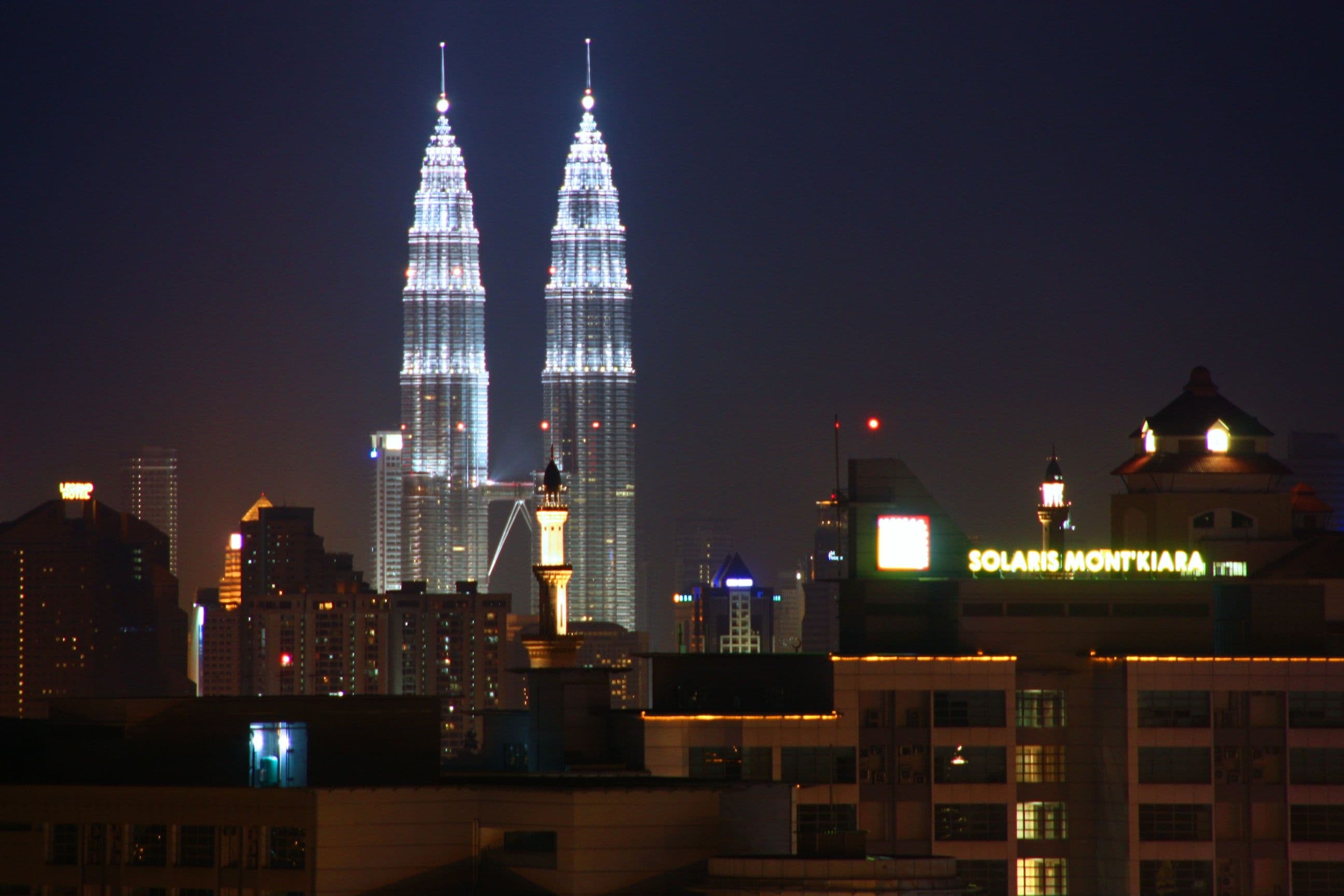
Watch the Petronas Towers light up. KLCC Park, right at the foot of the towers, is the best place for an evening walk, with a fountain show at the lake.
Eat on Jalan Alor. This street in Bukit Bintang turns into one long open-air food court in the evening, with satay, noodles and grilled seafood.
Visit the Batu Caves early. The colourful staircase and cave temples just north of the city are best before the heat and the crowds; a KTM Komuter train takes you there.
Have a drink at a rooftop bar. Bukit Bintang and KLCC have plenty, with views of the towers and KL Tower.
Take a long weekend. Penang (George Town) is a short flight away and famous for its food and street art; Melaka is about two hours by bus and has a UNESCO-listed old town.
Yes. It combines fast internet, modern comfort, great food and low costs.
Up to 90 days for EU citizens. Don't forget the MDAC arrival card, which you can submit online for free within three days before arrival.
Bangsar for a local, walkable feel; Bukit Bintang or KLCC for convenience.
KL has faster and more reliable internet and more city comfort. Bali wins on nature and atmosphere.
Seven hours ahead in European winter, six in European summer.
Generally yes, including at night in busy areas. The main risk is petty crime such as bag snatching, so carry your bag on the side away from the road and keep your phone out of reach from passing motorbikes.
Kuala Lumpur is part of my Southeast Asia workation guide, alongside Thailand, Bali, Vietnam and Cambodia.