Country Guide
Turkey offers two very different workations close to the rest of Europe: Istanbul, one of the world's most exciting cities, and Antalya, a Mediterranean base with mild winters.
Best for
City lovers (Istanbul) and winter sun seekers (Antalya)
Best months
April to June and September to November for Istanbul; October to May for Antalya
Cost per day
Roughly €60–€150 including a good hotel
Internet
Good in cities and hotels; use an eSIM for mobile data
Less suited if you want a quiet, compact base. Istanbul is huge and busy, and Antalya's beach areas fill with package holidaymakers in summer.
Turkey's two main workation bases could hardly be more different. Here is how they compare, with where to work and where to stay in each, followed by the stays I list there.
 Most popular
🏙️ City · 🏛️ Culture
Best months
 Best value
🏙️ City · 🏖️ Beach · 🌿 Nature
Best months
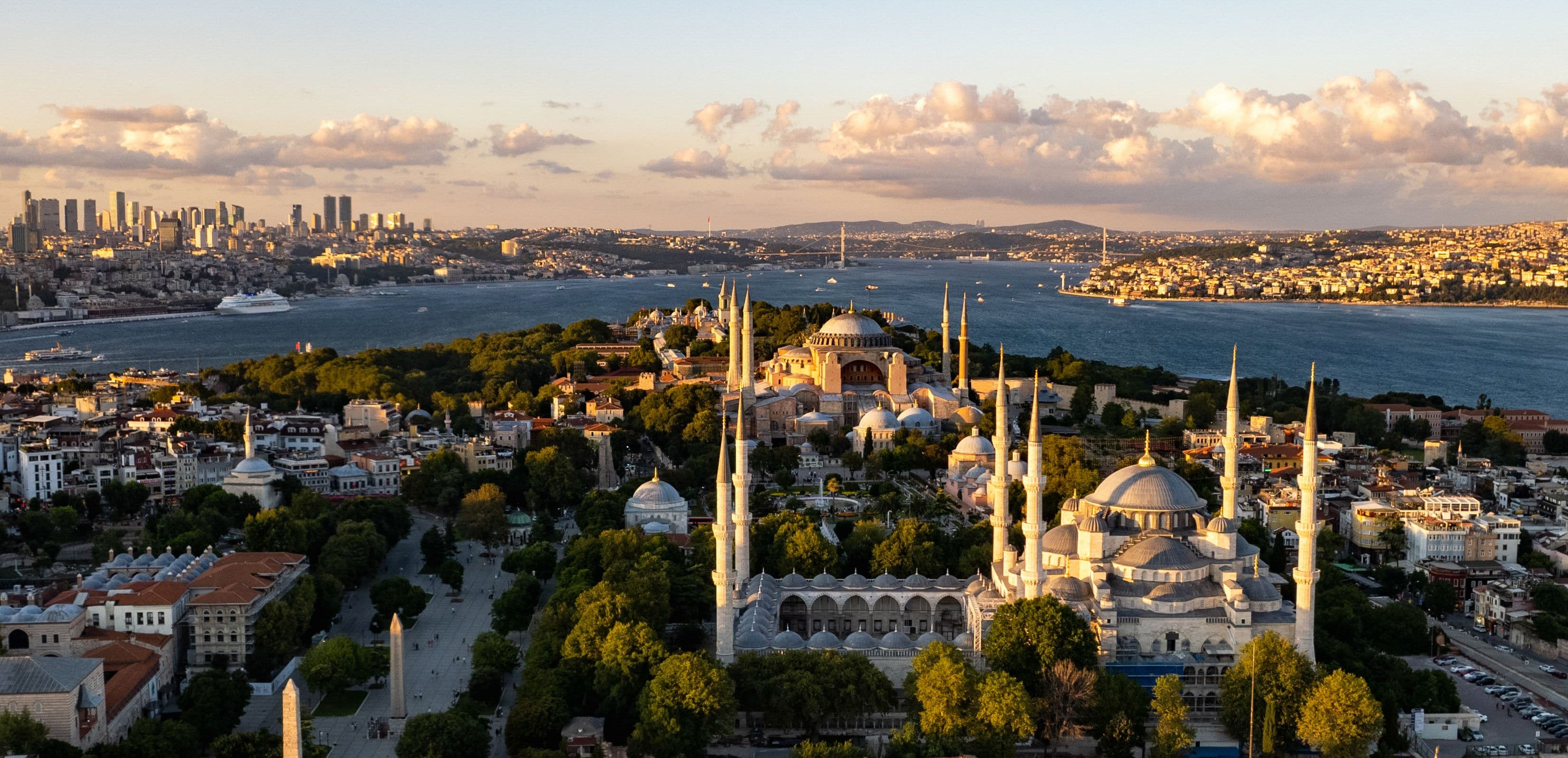
A huge, vibrant city on two continents, with world-class food, history and neighbourhoods that each feel like a different city. Winters are cool and damp, around 9°C in January.
Where to work
Kolektif House, Turkey's best-known coworking brand, with locations such as Levent, Şişhane and Moda (check day pass prices directly); countless cafés in Kadıköy, Moda and Karaköy are fine for laptop work
Where to stay
Kadıköy and Moda on the Asian side for a local, lively feel; Beyoğlu, Cihangir and Karaköy for a central base close to the sights
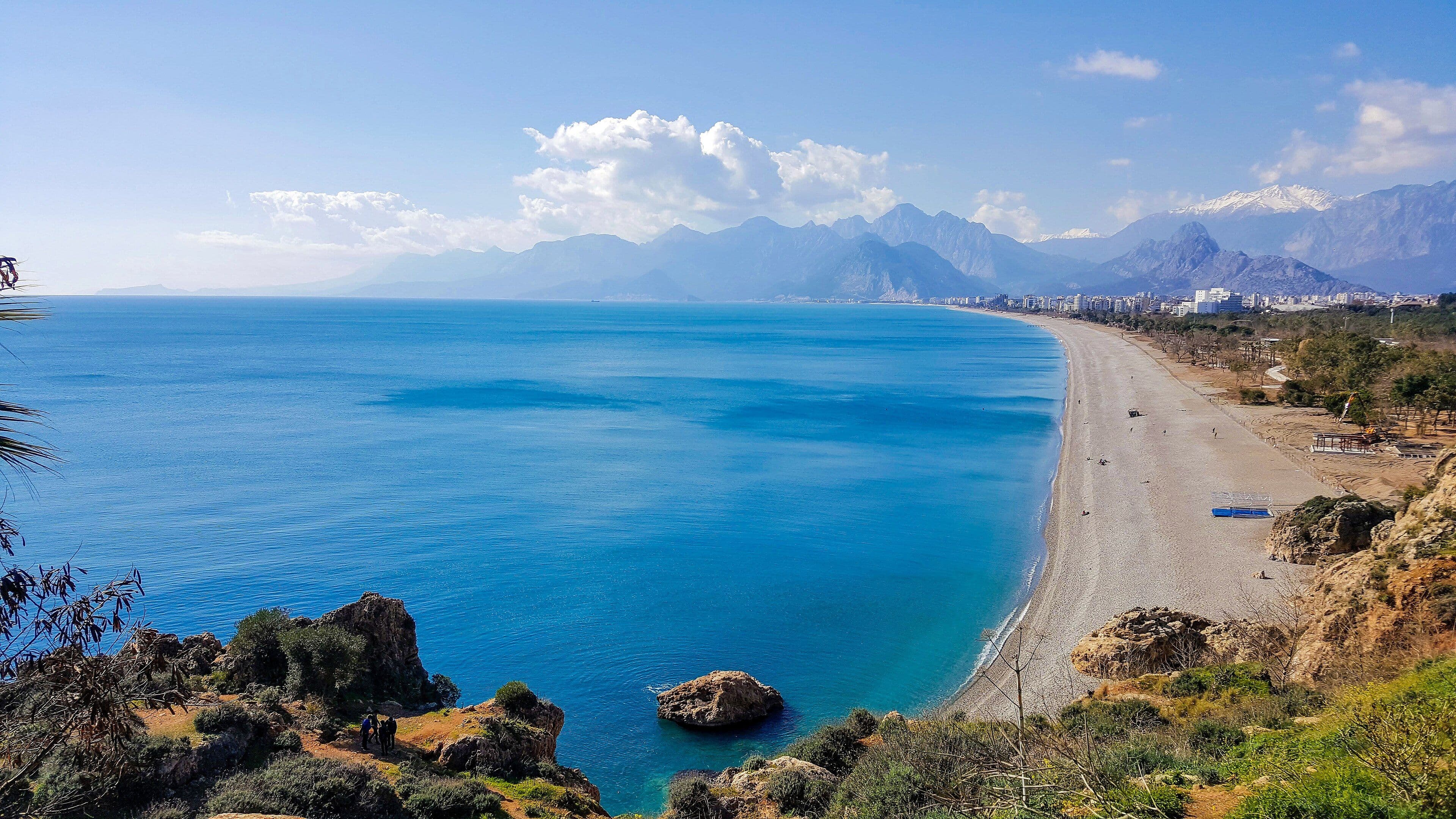
A laid-back Mediterranean city with an old town, cliffs and beaches. In winter, days are mild (around 15°C in January) and often sunny, although January is also the rainiest month.
Where to work
Coworking Antalya in the old town and Lara Coworking, with monthly plans from around 2,800 TL; many remote workers simply work from their hotel or apartment, so ask for a photo of the desk and a speed test
Where to stay
Kaleiçi, the historic old town; Konyaaltı, with its long pebble beach; or Lara, a newer area to the east
Hotels, cafés and coworking spaces in Istanbul and Antalya generally have reliable WiFi. Always check reviews for your specific stay, as older buildings can have slower connections.
Turkey is not part of the EU roaming area, so using your normal EU mobile plan can get expensive. A Turkey eSIM is the easiest solution; a 5 GB plan costs roughly €10–€15. Travel eSIMs also avoid the IMEI registration rules that apply to local Turkish SIM cards. Read my guide to eSIMs for workations.
A rough week for one person, excluding flights. Prices in lira change quickly because of inflation, so check current rates:
Stay
€300–€700
For a good hotel room or apartment
Food
€80–€180
Coworking
€40–€90
For five days
Transport
€15–€40
In Istanbul with an Istanbulkart, taxis extra
Also budget for
Turkey is one or two hours ahead of Central Europe, depending on the season, which gives you a relaxed start to the day.
Dec–Feb
Cool and wet in Istanbul; mild and often sunny in Antalya, with rainy spells
Mar–May
Spring, great in both cities; tulip season in Istanbul in April
Jun–Aug
Hot, and Antalya is packed with beach holidaymakers
Sep–Nov
Warm sea in Antalya, pleasant temperatures in Istanbul
Istanbul and Antalya both have direct flights from across Europe. Istanbul has two airports: Istanbul Airport (IST) on the European side and Sabiha Gökçen (SAW) on the Asian side.
In Istanbul, get an Istanbulkart for the metro, trams, buses and ferries. Traffic can be extreme, so the metro and ferries are usually faster than a taxi. In Antalya, the tram and buses cover the centre, and taxis are affordable. The BiTaksi app is a useful way to order a taxi in Istanbul.
Dutch citizens can visit Turkey visa-free for up to 90 days in any 180-day period, and can enter with a valid ID card as well as a passport. Visitors are not allowed to take up local employment. For longer stays, a short-term residence permit is possible.
Take a ferry across the Bosphorus. The public ferries between Kadıköy, Karaköy, Eminönü and Beşiktaş are cheap, fast and one of the best sunset views in the world.
Explore the bazaars. The Grand Bazaar and Spice Bazaar are best visited on a weekday afternoon, when you can combine them with a walk through the old city.
Visit the Hagia Sophia and Blue Mosque. Go early or late in the day, dress modestly and avoid prayer times.
Wander Kaleiçi in Antalya. The old town's narrow streets lead down to the old harbour, with cliffs and restaurants overlooking the sea.
Hike the Lycian Way. Sections of this long-distance trail along the coast west of Antalya make great weekend hikes from autumn to spring.
Antalya is one of the milder winter options close to Europe. Istanbul is cool and rainy in winter.
No. Use a Turkey eSIM to avoid high roaming costs.
Yes, Dutch citizens can enter with a valid ID card for short visits.
Istanbul for city life and culture, Antalya for sun and the sea.
Pay in Turkish lira. Cards are widely accepted, and when a card machine or ATM offers to charge you in euros, choose lira to avoid a poor exchange rate.
Antalya features in my winter sun workation guide, and Turkey is part of my Southern Europe guide. For more city workations, see my Europe guide.