City Guide
Florence is a workation for people who love art, food and beautiful streets. The historic centre is compact and walkable, the food is excellent at every price level, and on weekends you can explore Tuscany's hills, vineyards and hilltop towns.
Best for
Culture and food lovers who want weekends in Tuscany
Best months
April to June and September to October
Cost per day
Roughly €110–€190 including a mid-range stay
Internet
Good in hotels and coworking spaces; can be slower in old buildings
Less suited if you plan to come in July and August, when the city is hot and very crowded.
Internet in Florence is generally good in hotels, apartments and coworking spaces. Thick walls in historic buildings can weaken WiFi between rooms, so check that the desk is where the signal is strong, and read recent reviews.
Italy is in the EU, so EU roaming rules cover your normal mobile plan. A European eSIM is a good backup if your data abroad is limited. Read my guide to eSIMs for workations.
Coworking day passes in Florence usually cost around €15–€25.
Multiverso
One of the more affordable coworking spaces in Florence, with day passes from around €15 and monthly plans from around €120.
Impact Hub Firenze
Part of the global Impact Hub network, with a good mix of local and international members. Monthly coworking memberships start around €190.
The Social Hub Florence
Hotel and coworking in one, with locations such as Lavagnini and Belfiore. Day passes start around €24.
Cafés in Santo Spirito and Sant'Ambrogio work well for an hour or two, but Italian cafés are often designed for a quick espresso at the bar rather than long laptop sessions.
Oltrarno and Santo Spirito
Across the river from the main sights, with artisan workshops, a lively square and a more local feel.
Santa Croce and Sant'Ambrogio
Central but a bit calmer than the Duomo area, with a great food market (Mercato di Sant'Ambrogio).
San Lorenzo and near Santa Maria Novella station
Practical for trains and day trips, with the Mercato Centrale nearby; busier and more touristy.
Campo di Marte
A residential area east of the centre, cheaper for longer stays and with good train links.
A Florence stay I list:
Other stays I list in Florence:
A rough week for one person with a mid-range stay, excluding travel:
Stay
€600–€1,100
For a hotel room or apartment with a desk
Food
€170–€280
A panino and an espresso make a cheap, excellent lunch
Coworking
€75–€125
For five day passes
Transport
€10–€25
The centre is walkable
Also budget for
The main trick is to use quieter hours: museums and famous sights are much calmer early in the morning and late in the afternoon.
Nov–Feb
Cool and quieter, with lower prices; some rainy days
Mar–May
Spring, one of the best times for a workation; Easter is busy
Jun–Aug
Hot, often above 30°C, and very crowded
Sep–Oct
Warm days, harvest season in Tuscany, excellent for weekends in the countryside
Florence has a small airport with a tram connection to the centre, and Pisa airport is about an hour away by train or bus. Santa Maria Novella station has high-speed trains to Rome, Bologna, Milan and Venice.
The historic centre is compact and best explored on foot. Much of it is a limited traffic zone (ZTL), so do not drive into the centre with a rental car. For weekend trips, regional trains and buses reach Siena, Lucca and Pisa easily.
Italy is in the EU and the Schengen area, so EU citizens only need a valid ID card or passport. If you work remotely for an employer in another EU country, ask about an A1 certificate before you go.
Watch the sunset from Piazzale Michelangelo or the quieter San Miniato al Monte above it.
Visit the Uffizi or the Accademia late in the afternoon; book timed tickets in advance.
Join locals for an aperitivo on Piazza Santo Spirito.
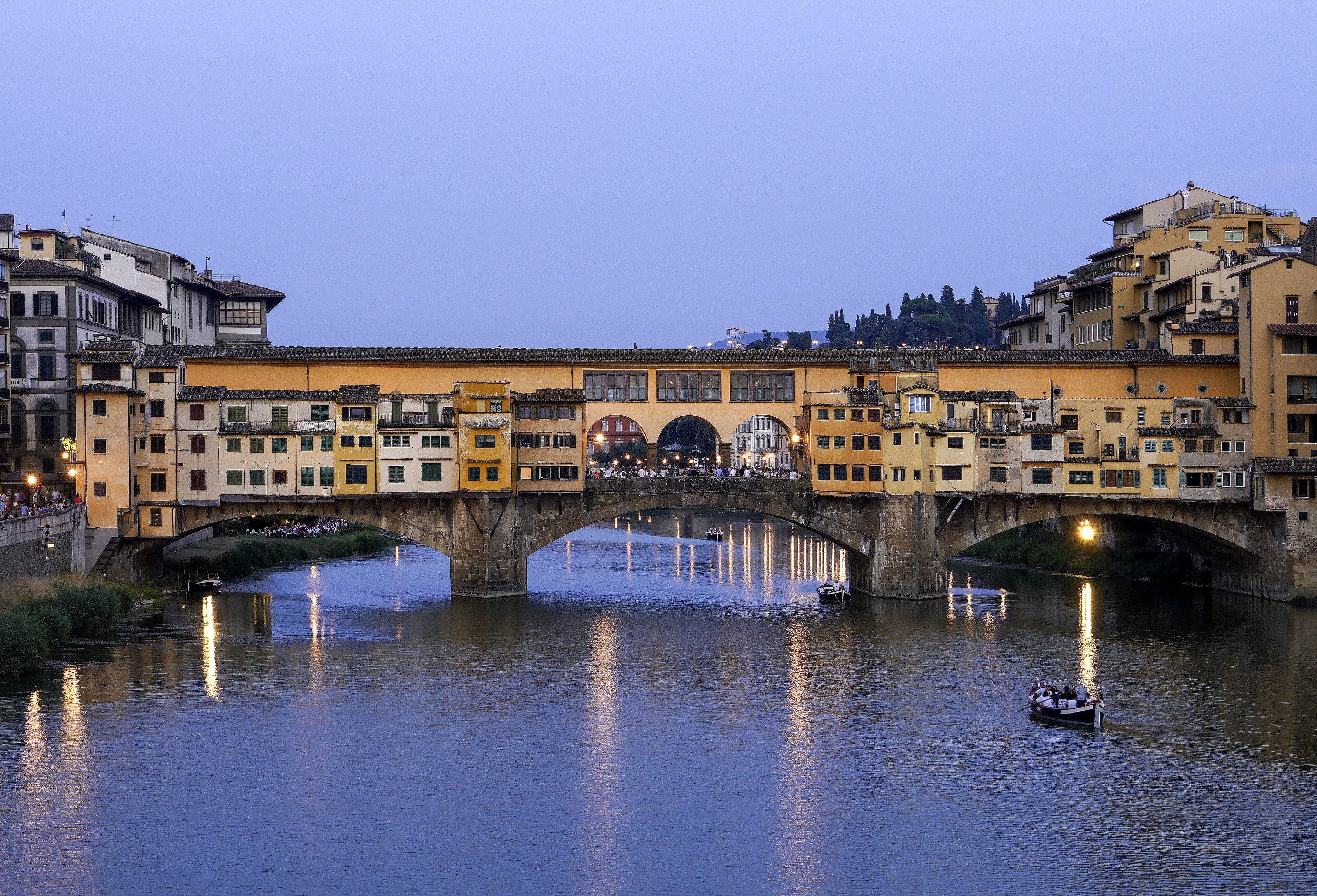
Walk across the Ponte Vecchio and through the Boboli Gardens.
Spend a weekend in Tuscany: Siena, Lucca, San Gimignano or a Chianti winery are all within easy reach.
Yes, especially in spring and autumn. It has good coworking spaces and a quality of life that makes evenings and weekends special.
Oltrarno and Santo Spirito for a local feel, Santa Croce for a central but calmer base.
Yes, charged per person per night depending on the type of accommodation, and capped after a number of nights.
No, most of the historic centre is a limited traffic zone. Walk, or use trams, buses and trains.
It is beautiful, but hot and very crowded. Spring and autumn are much better for a workation.
Florence is part of my Southern Europe and Europe workation guides. For winter sun, see my winter sun workation guide.