City Guide
Amsterdam is a compact, international city where working remotely is completely normal. Cafés are full of laptops, coworking spaces are everywhere, and the internet is excellent. The main downside is cost: Amsterdam is one of the most expensive cities in Europe to stay in, especially since the hotel taxes went up in 2026.
Best for
City workations, international teams, people who like to cycle everywhere
Best months
April to June and September
Getting there
Schiphol is one of Europe's biggest hubs; direct trains run from Brussels, Paris, London and many German cities
Cost per day
Roughly €170–€280 including a mid-range hotel
Internet
Excellent, both WiFi and mobile internet
Less suited if you are on a tight budget, or you want sun and warmth between November and March.
The Netherlands has some of the best internet in Europe. Hotels, coworking spaces and most cafés have fast, stable WiFi, and mobile internet is excellent.
Visitors from EU countries can use their normal mobile plan under EU roaming rules. Travellers from outside the EU can pick up a local SIM or use an eSIM. Read my guide to eSIMs for workations.
Coworking day passes in Amsterdam usually start around €20–€25.
The Social Hub Amsterdam City
A hotel with a large coworking area in Amsterdam Oost. Day passes across The Social Hub locations start around €19.
StartDock
A network of coworking spaces in Amsterdam and other Dutch cities, with day passes for €19.95 excluding VAT.
Mindspace and Spaces
International coworking brands with central locations, including Mindspace at Dam Square. Expect premium prices.
Hotel lobbies and cafés
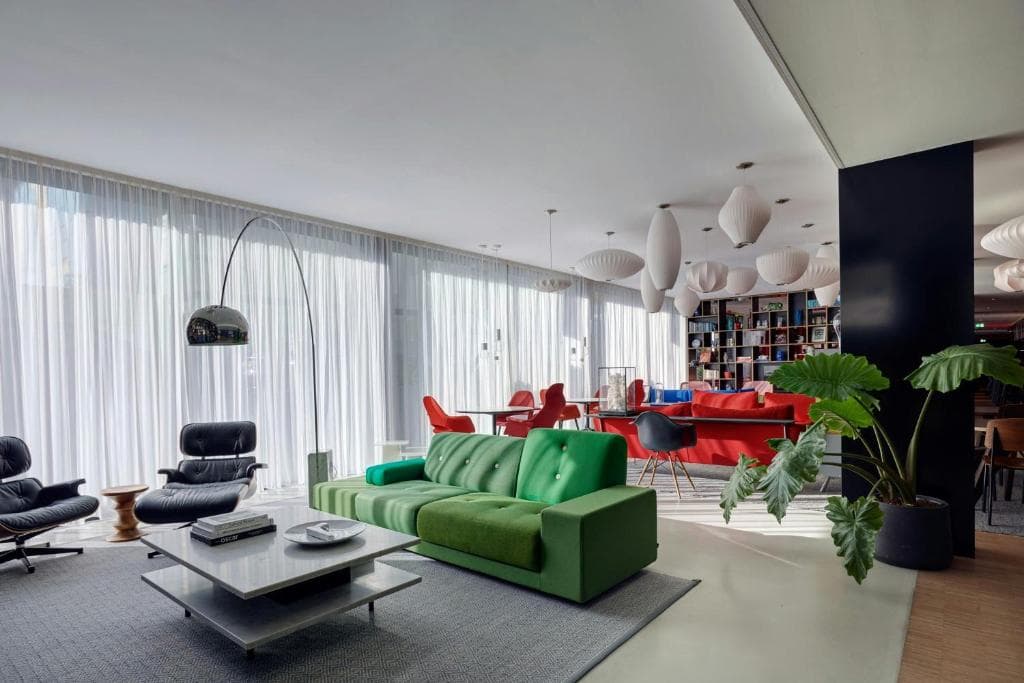
Many Amsterdam hotels, like citizenM and Volkshotel, have lively lobbies and work areas. Cafés in De Pijp, Oost and Noord are usually fine with laptops outside the lunch rush.
Oost
Green, multicultural and a little calmer than the centre, with Oosterpark and good tram links. The Social Hub Amsterdam City and Volkshotel are both in this part of town.
Zuid
Business district and upmarket residential area, close to the RAI and Zuidas. Practical and quiet, with fast connections to Schiphol.
Noord
Across the IJ by free ferry: creative, spacious and more affordable, with former shipyards turned into restaurants and studios.
De Pijp
Lively, with the Albert Cuyp market and lots of cafés. Great atmosphere, fewer hotels.
A selection of Amsterdam stays I list:
A rough week for one person with a mid-range hotel, excluding travel:
Stay
€900–€1,500
For a hotel room, including taxes
Food
€200–€350
Coworking
€100–€150
For five day passes
Transport
€25–€50
On trams and metro, or around €15 a day for a rental bike
Also budget for
Hostels such as Stayokay Vondelpark and ClinkNOORD bring the cost down, if you can work with shared spaces.
The trick is to use the flexibility of a workation to enjoy the city at quieter times.
Dec–Feb
Cold, grey and dark early, but cosy and quieter
Mar–May
Spring and tulip season; April is busy around King's Day (27 April)
Jun–Aug
Long days and terrace weather, peak prices
Sep
Often mild and a little calmer, a great month for a workation
Oct–Nov
Rain and wind return; good hotel deals
Schiphol has direct flights to most of Europe and many long-haul destinations. Trains from Schiphol to Amsterdam Centraal take around 15 minutes. International trains connect Amsterdam with Brussels, Paris, London and Germany.
In the city, you can tap in and out on trams, buses and the metro with a contactless bank card (OVpay). Cycling is the fastest way around; rent a bike for your stay and watch out for tram rails.
The Netherlands is in the EU and Schengen, so EU citizens only need a valid ID card or passport. If you are employed in another EU country, ask your employer about an A1 certificate. Travellers from outside Schengen are now registered in the EU Entry/Exit System on arrival.
Because the city is so compact, you can fit something in after almost every workday. A few ideas:
Take the free ferry to Noord. Free ferries leave from behind Amsterdam Centraal, and the crossing to the NDSM wharf takes around 15 minutes. At NDSM you will find a former shipyard with restaurants, street art and a completely different atmosphere from the canal ring.
Visit a museum late in the day. The Rijksmuseum and Van Gogh Museum are much calmer in the late afternoon than in the morning, and time slots must be booked online anyway.
Get out on the water. A canal cruise is the classic option; renting a small electric boat with colleagues or friends is more fun on a sunny evening.
Cycle out of the city. From Vondelpark it is a short ride to the Amstel, where you can follow the river past windmills and green meadows within half an hour.
Eat at a food hall. The Foodhallen in Oud-West has dozens of stands under one roof, which is easy when you finish work late.
Yes. Internet, coworking and cafés are excellent. The main challenge is the cost of accommodation.
12.5% of the room price, and since 2026 hotel stays also carry 21% VAT, so taxes add roughly a third to the room rate.
Noord and parts of Oost and Nieuw-West are usually cheaper than the canal ring.
Not necessarily, trams and the metro are good. But a bike is the most fun and fastest way to get around.
It can be cosy, with quieter museums and lower hotel prices, but days are short, grey and often wet. Plan indoor activities, or combine a few days in Amsterdam with a sunnier destination.
Many cafés are laptop-friendly, but some ban laptops at weekends or during lunch. Check before you settle in.
Amsterdam is part of my Europe workation guide. Nearby city workations include Prague and Budapest, and if you want to swap grey Dutch winters for sun, see my winter sun workation guide.