City Guide
Seville is the capital of Andalusia: orange trees, Moorish palaces, tapas bars and a compact old town you can walk everywhere. From autumn to spring it is one of the most pleasant cities in Europe to work from.
Best for
Remote workers who want culture, architecture and sun in a walkable city
Best months
February to May, and October to November
Cost per day
Roughly €100–€170 including a mid-range stay
Internet
Fast in hotels, apartments and coworking spaces
Less suited if you travel in July or August, when temperatures regularly go above 40°C, or if you want a beach on your doorstep.
Spain has some of the fastest internet in the world, and Seville is no exception. Hotels and apartments in the centre usually have fast WiFi, and coworking spaces are well set up for calls. In old buildings with thick walls, check that your desk is where the signal is good.
EU roaming covers you on your normal mobile plan. A European eSIM is an easy backup if your data allowance abroad is small. Read my guide to eSIMs for workations.
Seville has a smaller coworking scene than Madrid or Valencia, but day passes are affordable, usually €15–€20.
Coworking Sevilla
A central coworking space with day passes around €15.
Arcadia Coworking
Another affordable option, with day passes from about €17 plus VAT.
workINcompany and Thinking Company
More business-style spaces, with day passes from about €20.
Cafés around the Alameda de Hércules and in Triana work well for a few hours of email. For calls, a coworking space or your room is better, as tapas bars get loud from lunchtime.
Centro and Santa Cruz
The historic heart around the cathedral, the Alcázar and the Setas. Beautiful and walkable, but busy with tourists.
Alameda and Macarena
A lively, local area north of the centre, with bars, cafés and a younger crowd. Can be noisy at night around the Alameda.
Triana
Across the river, with its own character, ceramics shops and the Triana market. A little calmer and more local.
Nervión
A modern business area east of the centre, practical and quieter, close to the Santa Justa train station.
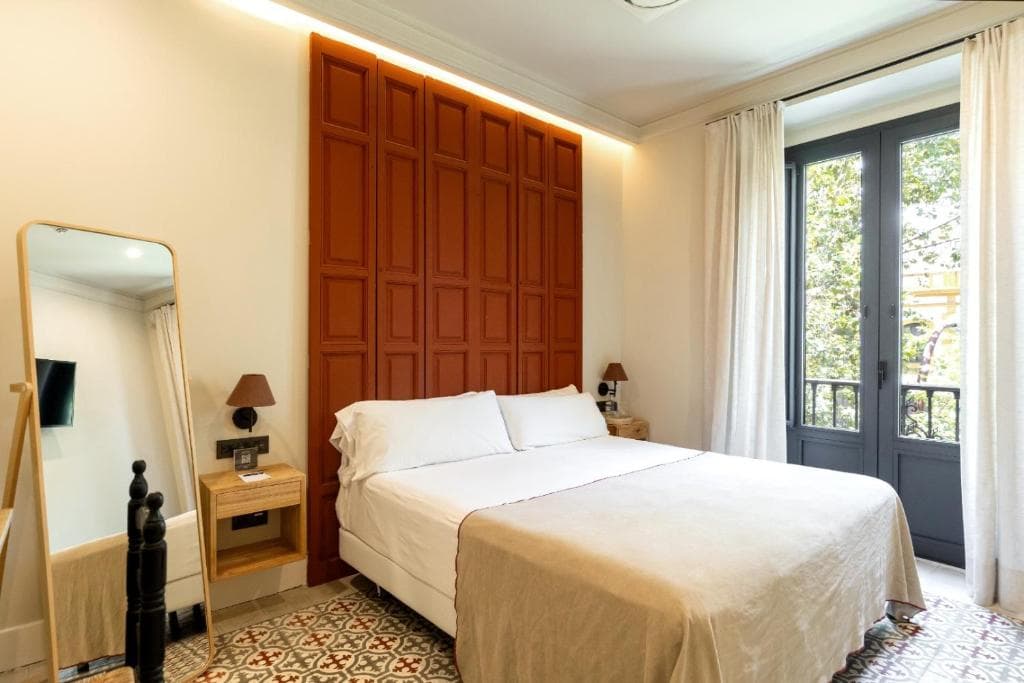
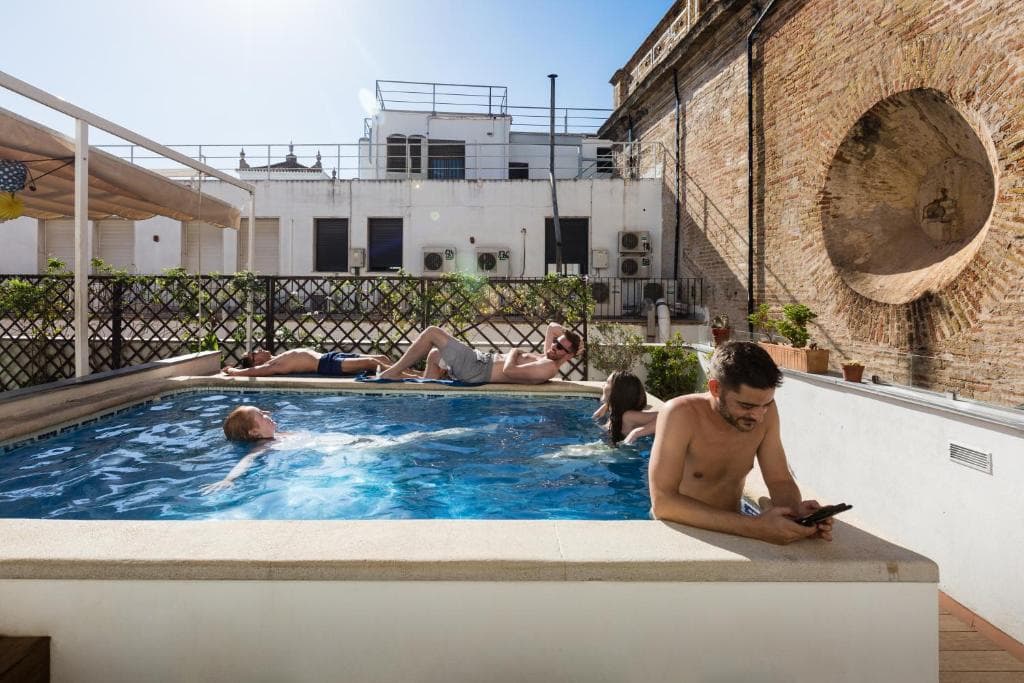
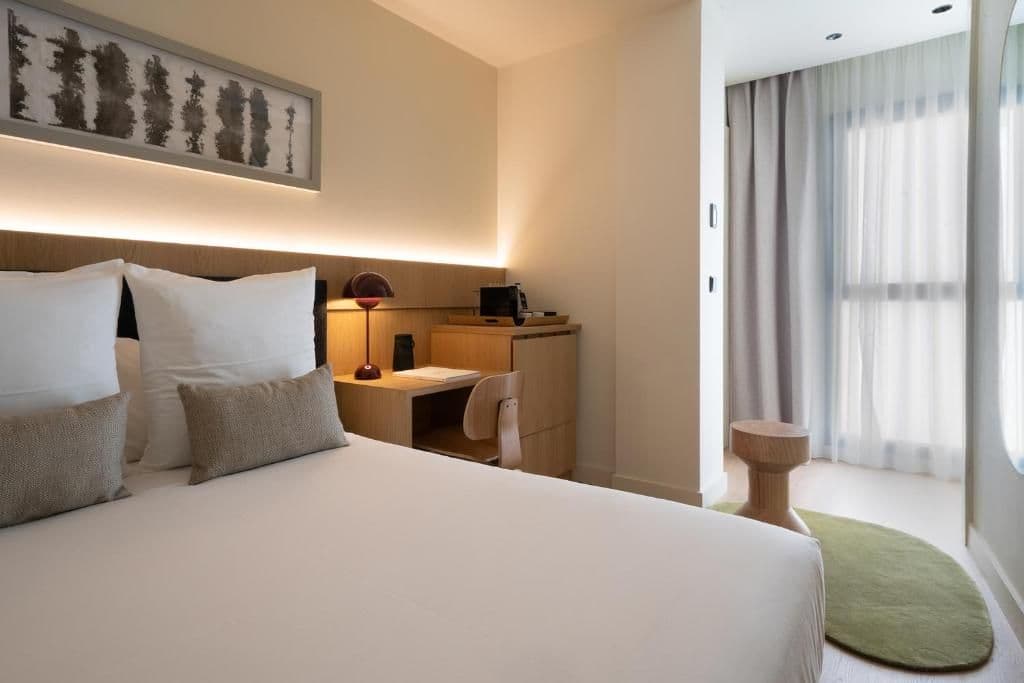
Stays I list in Seville, including two hostels with their own coworking space. Wherever you book, check for a real desk, reviews that mention the WiFi, and air conditioning.
A rough week for one person with a mid-range stay, excluding travel:
Stay
€450–€850
For a hotel room or studio with a desk
Food
€140–€220
Tapas and a menú del día at lunch keep it affordable
Coworking
€75–€100
For five day passes
Transport
€10–€25
You walk almost everywhere
Prices rise sharply during Holy Week (Semana Santa) and the April Fair, so book early or avoid those weeks.
Feb–May
Mild to warm and sunny, orange blossom in March; the best time for a workation
Jun–Sep
Very hot, often above 40°C in July and August; many locals leave the city
Oct–Nov
Warm days and fewer tourists
Dec–Jan
Around 15°C by day and cold nights (around 6°C); many homes have little heating
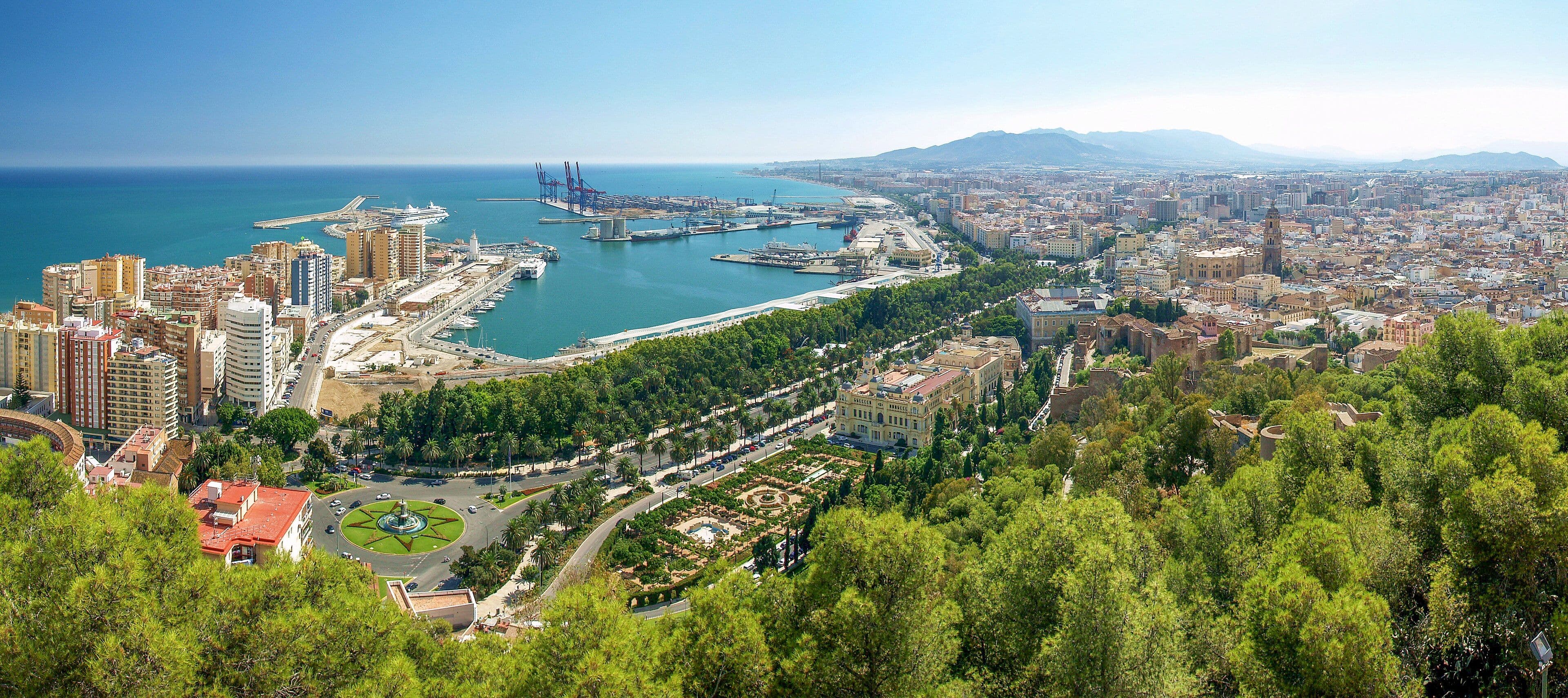
Seville airport is about 10 km from the centre, with an airport bus to the city. High-speed AVE trains connect Seville with Córdoba, Madrid and Málaga, so it combines well with a Málaga workation.
The old town is best explored on foot or by bike, and there is a tram and a metro line for longer distances.
Seville is in Spain, part of the EU and Schengen. EU citizens only need a valid ID card or passport. If your employer is in another EU country, ask about an A1 certificate, which confirms you stay in your home country's social security system.
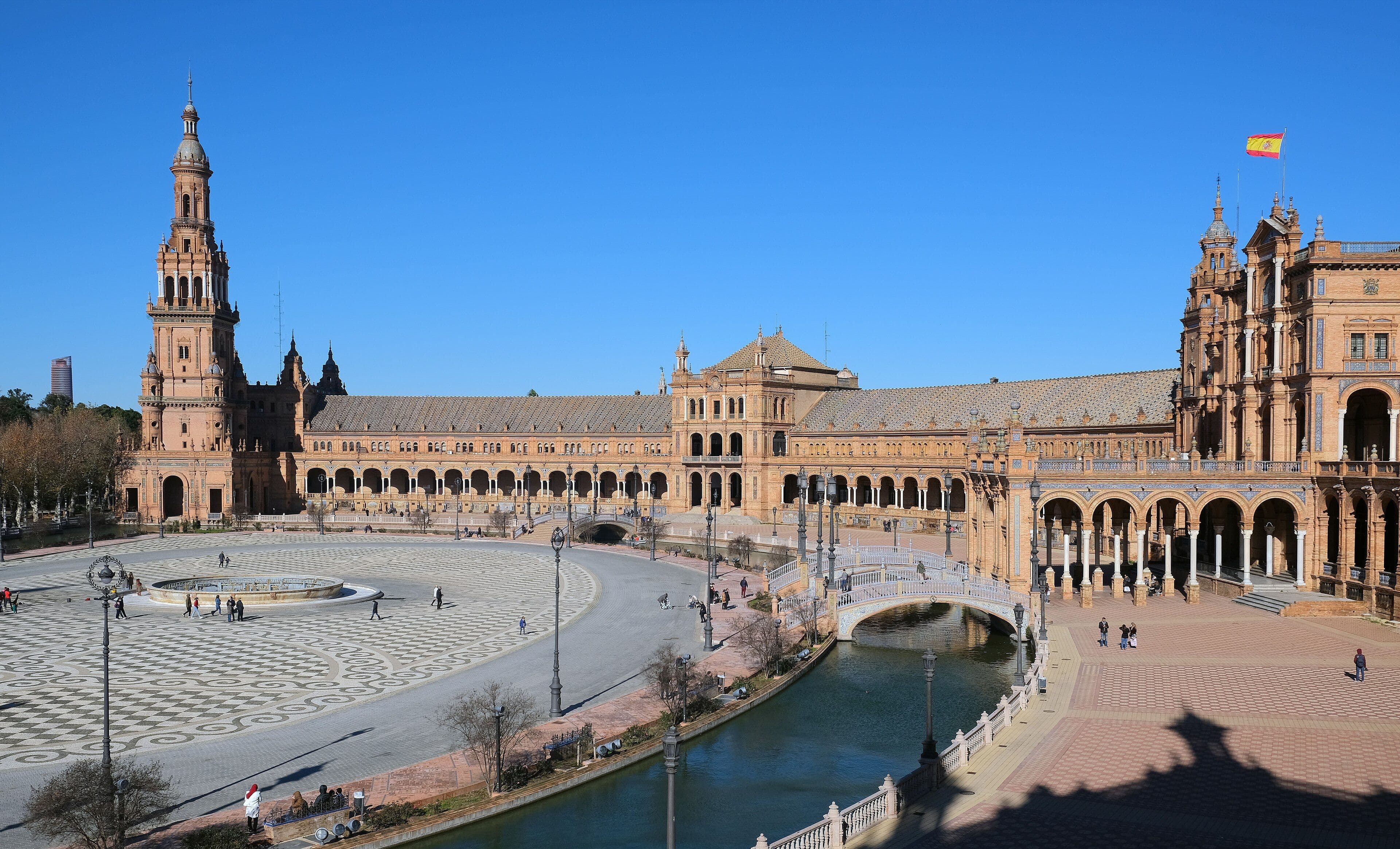
Walk through the Plaza de España and the María Luisa park at sunset
Visit the Real Alcázar early in the morning, before the crowds
Go on a tapas crawl in Triana or around the Alameda
Watch a flamenco show in a small peña rather than a big tourist venue
Take a day trip to Córdoba by high-speed train
Yes, outside summer. Internet is fast, the city is compact and walkable, and coworking day passes are affordable.
Days are mild and often sunny, around 15°C in January, but nights are cold and many homes have little heating.
Seville for culture and architecture, Málaga for the sea, a milder winter and a bigger remote work scene. They are two hours apart by train, so you can do both.
Seville is part of my Spain guide. Compare it with other winter sun destinations in my winter sun workation guide, or combine it with Málaga.