City Guide
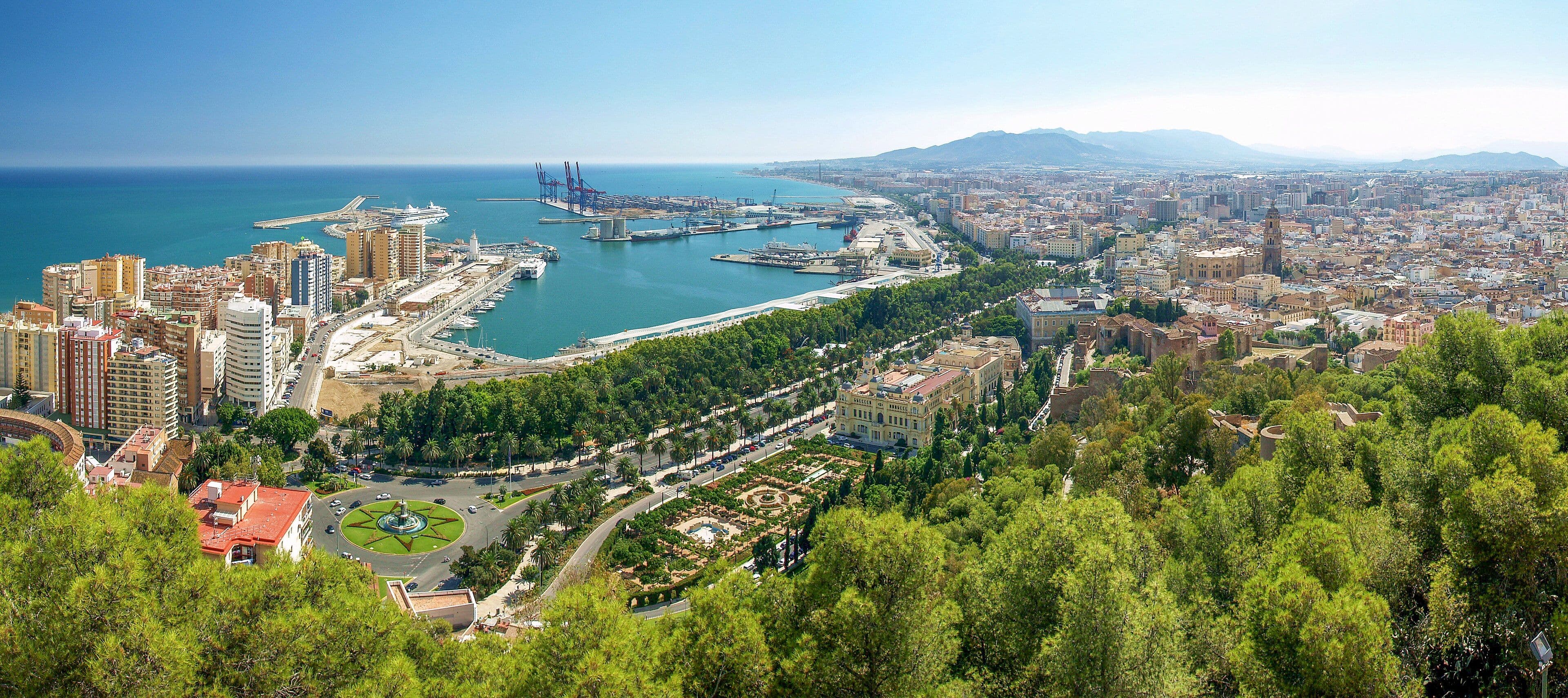
Málaga has turned from a stopover for Costa del Sol beach holidays into one of Spain's most popular cities for remote workers. It has a compact historic centre, a city beach, a growing tech scene and some of the mildest winters in mainland Europe.
Best for
Winter sun seekers who want a real city, not a resort
Best months
October to June
Cost per day
Roughly €110–€190 including a mid-range stay
Internet
Fast, in apartments, hotels and coworking spaces
Less suited if you need a big-city coworking scene like Barcelona's or Lisbon's, or you plan to come in July and August, when the heat and crowds peak.
Spain has some of the fastest internet in the world, and Málaga is no exception. Apartments and hotels in the centre usually have fast internet, and coworking spaces are well equipped for calls.
Older buildings in the historic centre sometimes have thick walls that weaken WiFi between rooms, so ask for a room with good WiFi, or check that the desk is where the signal is good.
As an EU resident, you can use your own mobile plan under EU roaming rules. If your data allowance abroad is small, a European eSIM makes a good backup. Read my guide to eSIMs for workations.
Day passes in Málaga usually cost €20–€30.
The Living Room (Soho)
A community coworking space in the arts district of Soho. Day passes around €25 including VAT.
Impact Hub Málaga (Centro)
Part of the international Impact Hub network, with events and a mix of local and international members. Day passes around €20.
La Aduana (Centro)
A central coworking space about a 12-minute walk from Soho, with day passes around €30.
Momentum (Soho)
A coworking space in Soho with day passes around €29.
Cafés in Soho and around the Plaza de la Merced are fine for a few hours of email. For calls, a coworking space or your room is quieter.
Málaga's tech scene has grown quickly, with international companies opening offices and the Málaga TechPark on the edge of the city. That means regular meetups and events if you want to meet people in tech.
Soho
The arts district between the centre and the port, known for street art and the highest concentration of coworking spaces.
Centro Histórico
The historic centre around the cathedral and Calle Larios. Beautiful and central, but busy and noisier at night.
Pedregalejo
A former fishing neighbourhood by the beach, about 15 minutes from the centre, with seafood restaurants and a relaxed feel.
Teatinos
A residential university area, more affordable for longer stays, but further from the sea.
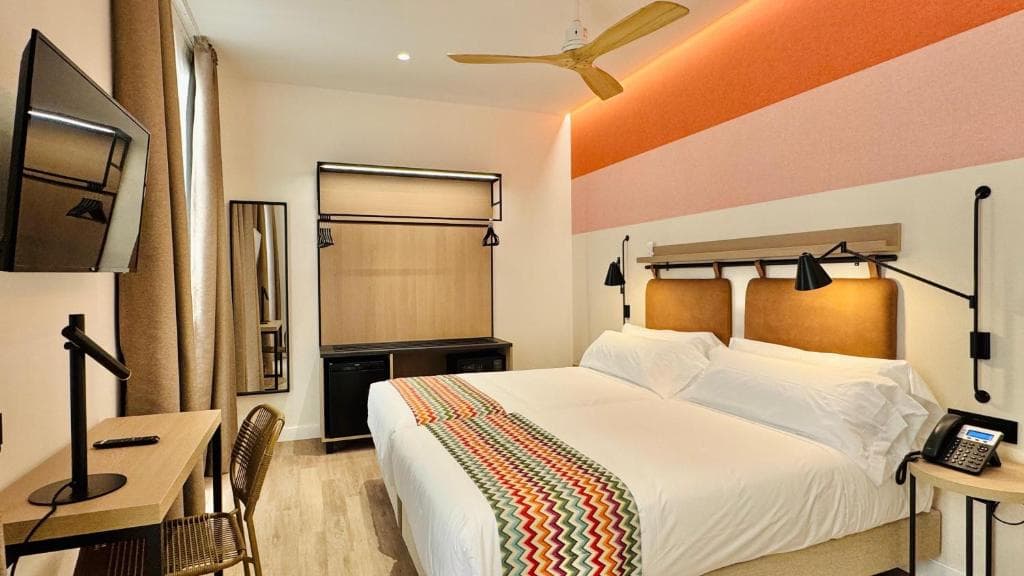
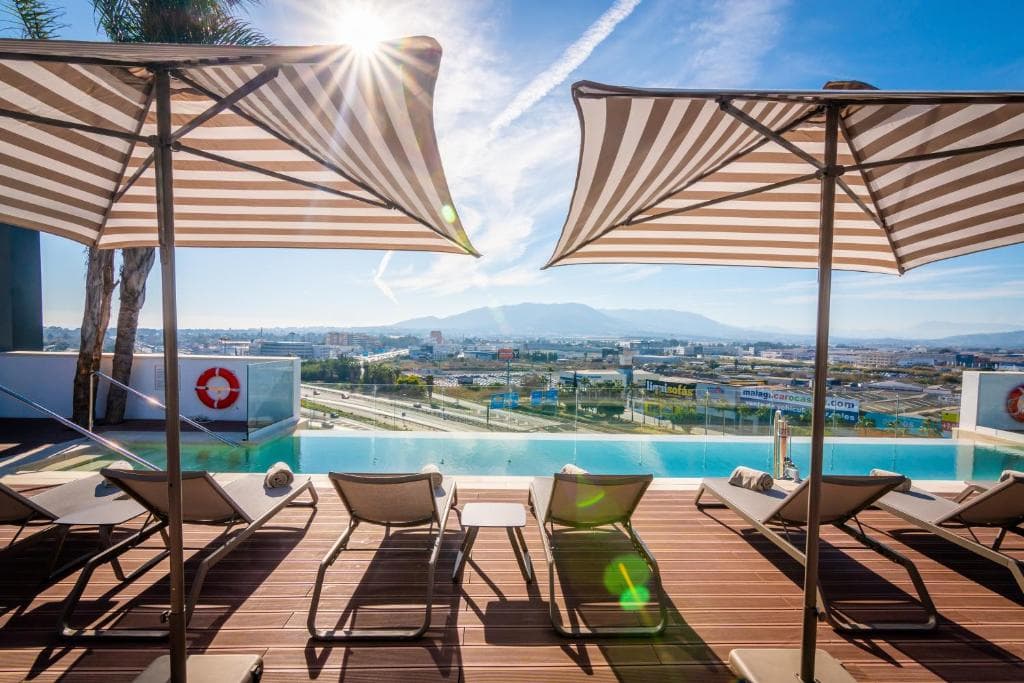
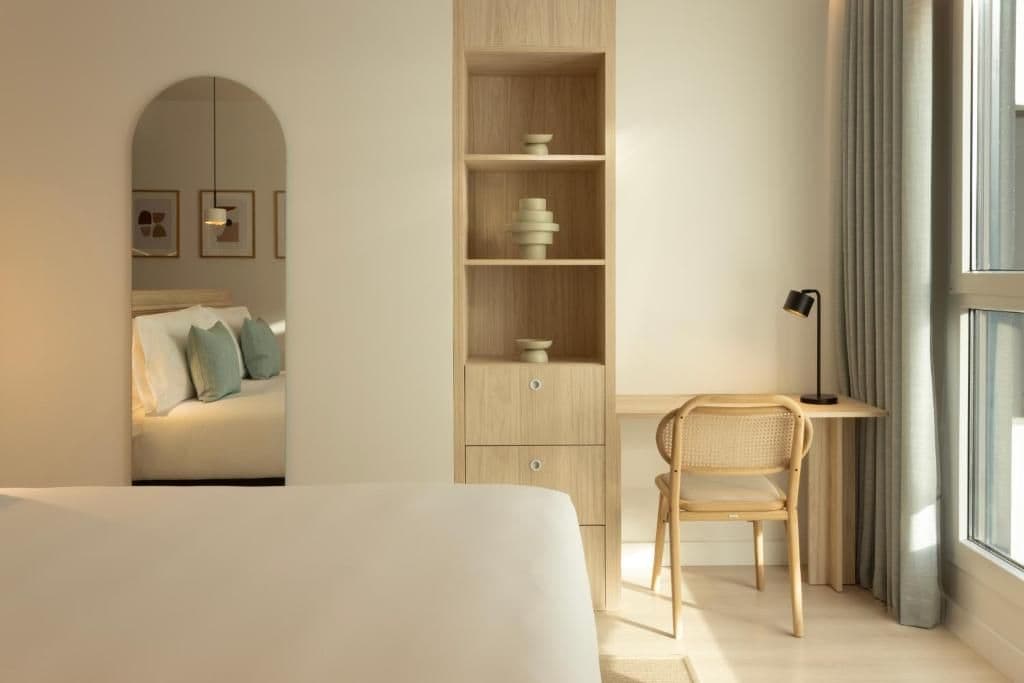
Three stays I list in Málaga. Hotel Doho is in the centre, Staybridge Suites has a kitchen in every unit, and Málaga Vibes is good value but about 5 km from the centre, towards the airport. Wherever you book, look for air conditioning in summer and heating in winter, as many Spanish homes are cold in January.
A rough week for one person with a mid-range stay, excluding flights:
Stay
€500–€900
For a hotel room or apartment with a desk
Food
€150–€250
Meals out usually cost €12–€18
Coworking
€100–€150
For five day passes
Transport
€10–€25
The centre is walkable
Also budget for
In Málaga the sun rises and sets late, and Spanish meal times run late too.
Nov–Feb
Mild, with daytime temperatures often around 16–18°C and plenty of sun; some rainy days
Mar–May
Warm and sunny, with Semana Santa (Easter week) processions
Jun–Aug
Hot and busy; the August feria fills the city
Sep–Oct
Warm sea, fewer crowds
Málaga gets around 300 sunny days a year, which is one of the main reasons remote workers choose it for a winter base.
Málaga's airport has direct flights from across Europe and is close to the city: the C1 commuter train reaches the centre in around 12 minutes.
The historic centre and Soho are walkable. Buses and the metro cover the rest of the city, and the train along the coast takes you to Torremolinos and Fuengirola. High-speed trains connect Málaga with Madrid, Seville via Córdoba, and Barcelona.
Spain is in the EU and Schengen area, so EU citizens only need a valid ID card or passport. If your employer is based in another EU country, ask about an A1 certificate before you go.
Climb to the Alcazaba and Gibralfaro. The Moorish fortress and the castle above it sit right next to the centre, and the walk up to Gibralfaro gives you a view over the port, the bullring and the sea.
Visit the Picasso Museum. Picasso was born in Málaga, and the museum in a 16th-century palace in the old town is an easy after-work visit.
Go to the beach. La Malagueta is a ten-minute walk from the centre. Further east, the beaches of Pedregalejo and El Palo are lined with chiringuitos serving grilled sardines (espetos).
Hike the Caminito del Rey. This famous walkway along a gorge is about an hour from Málaga and needs a timed ticket, so book a weekend slot in advance.
Take a day trip. Ronda's bridge over a gorge, the white village of Frigiliana near Nerja, and the Alhambra in Granada are all doable from Málaga.
Yes. It has some of the mildest winters in mainland Europe, with lots of sunny days.
Soho for coworking and atmosphere, Pedregalejo if you want to live by the beach.
Usually €10–€30, and weekly or monthly passes bring the daily price down.
Less than Barcelona or Lisbon for food and coworking, but rents and hotel prices have risen fast as the city has become popular. Book early for Easter week and summer.
The Canaries are warmer in January, but Málaga has more city life and culture.
Málaga is part of my Spain guide. Compare it with the Canary Islands, Madeira and Antalya in my winter sun workation guide, or explore more of Southern Europe.