City Guide
Barcelona combines a big-city lifestyle with a beach, a mild climate and one of Europe's largest coworking scenes. You can keep your normal working hours and still end the day by the sea.
Best for
City lovers who want a beach after work
Best months
April to June and September to October
Cost per day
Roughly €140–€260 including a mid-range hotel
Internet
Fast; Spain has some of the fastest internet in the world
Less suited if you want a quiet, cheap base, or you plan a long stay in July and August, when the city is hot and crowded.
Spain has some of the fastest internet in Europe, and Barcelona hotels, apartments and coworking spaces are well connected. Café WiFi is fine for email, less reliable for calls in busy areas.
Under EU roaming rules, you can use your normal mobile plan. A European eSIM is a handy backup if your data abroad is limited. Read my guide to eSIMs for workations.
Day passes in Barcelona usually cost €15–€25. Many spaces offer 5- or 10-day bundles that work out cheaper if you stay a week or two.
Aticco
A Barcelona coworking brand with several locations, including in Poblenou's tech district. Day passes around €35 plus VAT.
Cloudworks
Central spaces, including one on Passeig de Gràcia. Day passes from about €25.
OneCoWork
Spaces in iconic locations such as Plaça Catalunya and the Marina. Daily passes available.
MOB (Makers of Barcelona)
A creative community space, popular with designers and makers.
Gràcia and El Born have plenty of laptop-friendly cafés. Some cafés discourage laptops at lunchtime and weekends, so check before you settle in.
Gràcia
A village-like neighbourhood with squares, cafés and a local feel. Great for a longer stay.
Eixample
Central and well connected, with wide streets and many hotels. Practical for a short workation.
Poblenou
The former industrial area turned tech district (22@), close to the beach and full of coworking spaces.
El Born
Historic, atmospheric and lively, but busier and noisier at night.
Before you book an apartment, check that it has a valid tourist licence. Barcelona has been cracking down on illegal holiday rentals and plans to phase out tourist apartment licences altogether by 2028. For a short workation, a hotel with a desk is usually the simplest choice; for a month, look at mid-term rentals and colivings.
Barcelona stays I list, from central hotels to a hostel option:
A rough week for one person with a mid-range hotel, excluding flights:
Stay
€700–€1,300
For a hotel room with a desk
Food
€200–€320
Coworking
€75–€125
For five day passes
Transport
A T-casual card with 10 journeys costs €13
Also budget for
Spanish daily rhythms run late. Lunch is often at 14:00 and dinner at 21:00. Use that to your advantage.
Nov–Feb
Mild (around 13–15°C), quiet and cheaper; not beach weather
Late February or early March
Mobile World Congress fills hotels and pushes up prices for a week; check the dates before you book
Mar–May
Spring sun, one of the best times for a workation
Jun–Aug
Hot, crowded and expensive; August is when many locals go on holiday
Sep–Oct
Warm sea and fewer tourists
From Barcelona-El Prat airport, take the Aerobús to Plaça Catalunya or metro line L9 Sud; the metro needs a separate airport ticket of about €5.90. Regular T-casual tickets are not valid for the airport stations.
The metro is fast and covers most of the city. Walking is often the easiest way around the centre. Bicing, the city bike scheme, is for residents only, but there are plenty of bike rental shops.
High-speed trains from Barcelona Sants reach Madrid in around two and a half hours and the French border in under an hour and a half, so it is easy to combine Barcelona with another city.
Spain is in the EU and Schengen area. EU citizens only need a valid ID card or passport. If your employer is in another EU country, ask about an A1 certificate. Non-EU remote workers can look into Spain's digital nomad visa for longer stays.
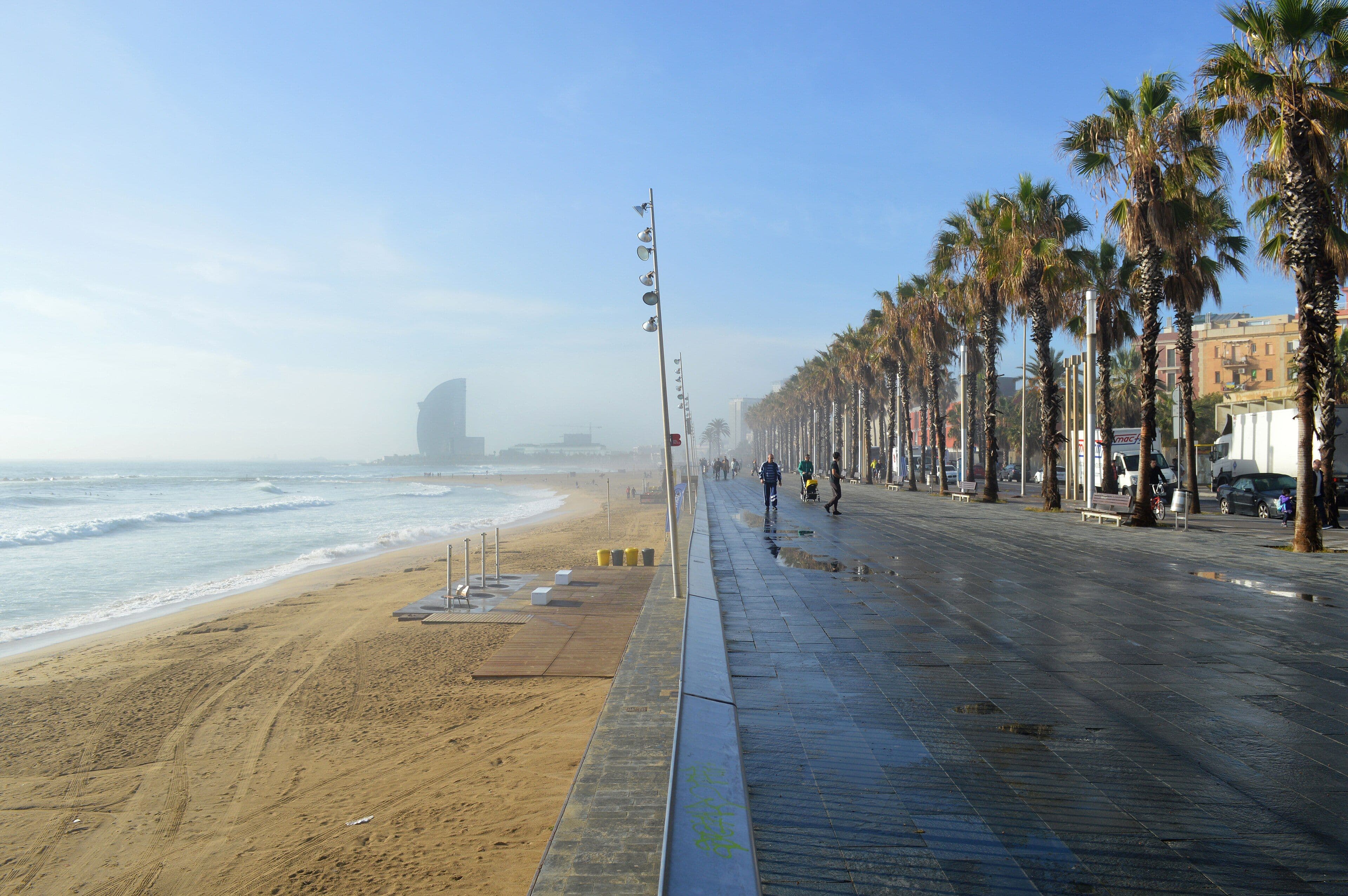
Swim or watch the sunset at the beach. Barceloneta is the most famous, but Bogatell and Nova Icària further up the coast are calmer and closer to Poblenou.
See Gaudí. The Sagrada Família and Park Güell need timed tickets, so book them for a late afternoon after work, when the light is beautiful.
Climb to the Bunkers del Carmel. The old anti-aircraft battery on a hill in El Carmel has one of the best views over the city, especially at sunset.
Eat at a market. The Mercat de Sant Antoni and Santa Caterina are less touristy than La Boqueria and great for a quick lunch or tapas.
Get out of the city at the weekend. Sitges is a beach town about 40 minutes away by train, and Montserrat's mountain monastery makes a good day hike.
Yes. It has fast internet, a huge coworking scene and a big international community.
It doubled on 1 April 2026. The exact amount depends on the type of accommodation, so check your booking.
Gràcia for local life, Poblenou for coworking and the beach, Eixample for convenience.
It is mild and quieter, but not warm enough for the beach. For winter sun, look at the Canary Islands or Málaga.
Generally yes, but pickpocketing is common, especially on the metro, on La Rambla and at the beach. Keep your phone and laptop close and never leave a bag on a café chair.
Barcelona is part of my Spain guide, alongside Málaga and the Canary Islands. For more options, see my Southern Europe and Europe workation guides.