Area Guide
Ubud is Bali's green, cultural heart: rice terraces, temples, yoga studios and a lot of good cafés. It was where I spent my first workweek in Bali, and it felt like a very natural place to work remotely. It is lively enough to keep things interesting, but calmer and more grounded than the busy coast.
Best for
Remote workers who want calm, nature and a slower pace
Best months
April to October (dry season)
Time difference with CET
+7 hours in winter, +6 hours in summer
Cost per day
Roughly €55–€110 including a good private room
Internet
Good in remote-work-focused stays and coworking spaces; check before you book
Less suited if you want the beach every day, or a big social scene with lots of events. For that, Canggu is the better base.
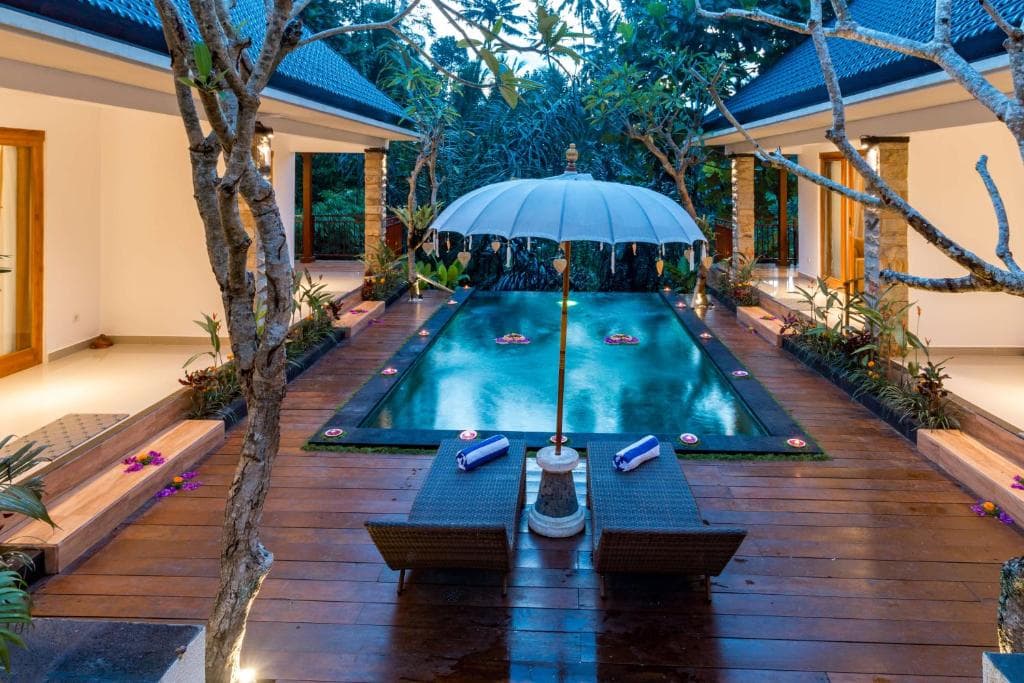
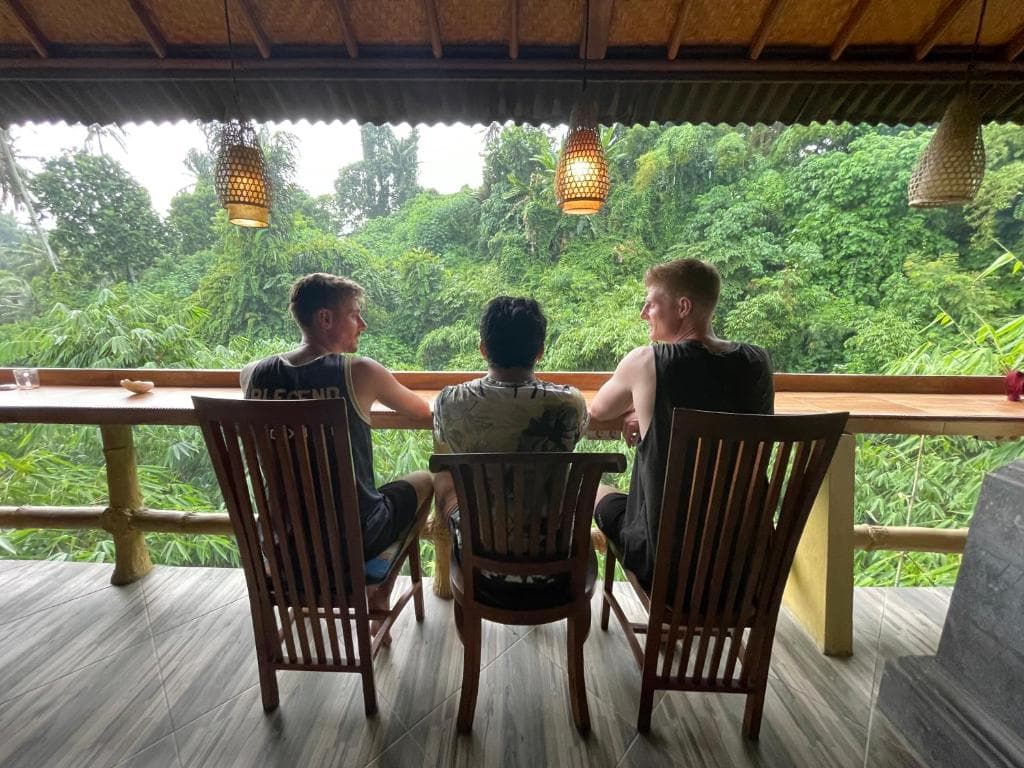
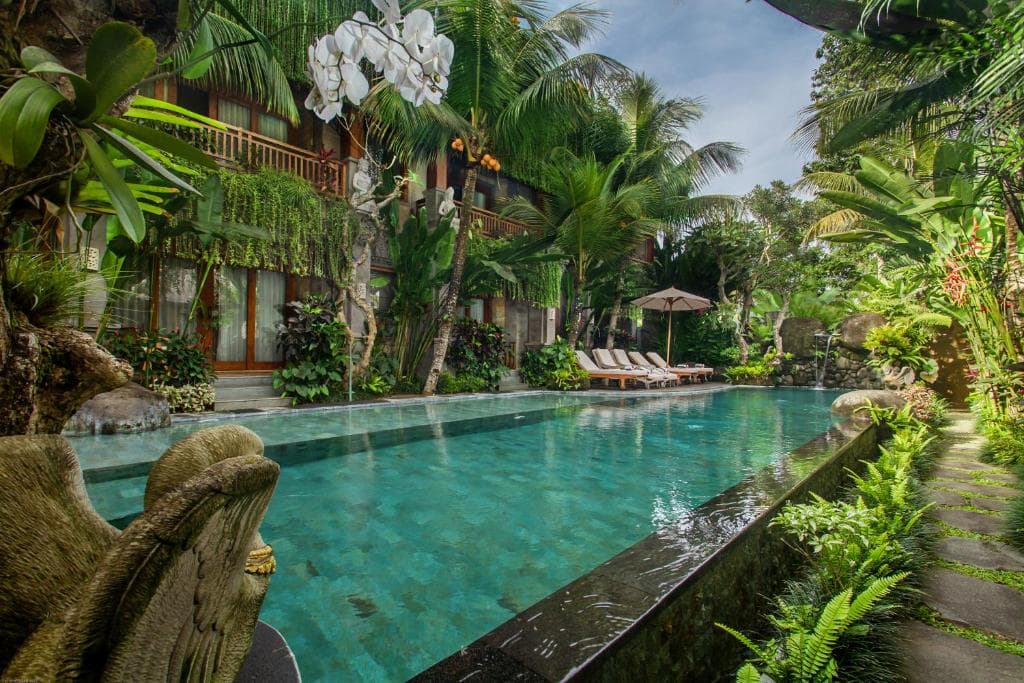
I had already visited Ubud during the holiday part of my Bali trip, so I was excited to come back and work from there. For that first workweek I stayed at Clan Living – The Founder, a quiet hotel with a practical coworking space by the pool and private rooms with a desk and an actual office chair.
Before the trip I researched Bali stays for a long time, and this one ticked every box on my list: a private room with a desk and proper chair, fast and secure internet, a pool, a restaurant on site and walking distance to central Ubud. Every morning the host texted me at the time of my choice to say breakfast was ready. It felt very personal, and I was actually a bit sad to leave.
Staying close to the centre meant cafés, restaurants and everything I needed were nearby, which made daily life very smooth. That matters on a workation: a good stay is not just about the room, but about how easy it is to live and work around it. Read the full story in my Bali trip report.
Ubud is one of the better-connected areas of Bali, along with Canggu and Seminyak. Remote-work-focused stays and coworking spaces usually have fast internet. Some villas in the rice fields outside town are a different story, so always ask for a recent speed test.
Mobile coverage in and around central Ubud is good. An eSIM gives you mobile internet from the moment you land, which you can share with your laptop as a backup during important calls. Read my guide to eSIMs for workations.
Your stay
In Ubud, the best workspace is often your accommodation. Clan Living has a coworking area by the pool and desks in the rooms, which is exactly why I chose it.
Outpost Ubud (Penestanan and Nyuh Kuning)
Ubud's main dedicated coworking brand, with two locations. Day passes around $15 (about €13) and monthly memberships around $195.
Hubud, Ubud's legendary first coworking space, has closed, so ignore older guides that still recommend it. Cafés in central Ubud and Penestanan work well for a few hours of email, but for calls a quiet room or coworking space is better.
Central Ubud
Walkable, with the market, the palace, cafés and restaurants close by. The most practical base, and where I stayed.
Penestanan
A village just west of the centre with rice fields, yoga studios and Outpost's coworking. Popular with longer-staying remote workers.
Nyuh Kuning
A quiet village south of the Monkey Forest, with the other Outpost location. Peaceful, but you rely more on transport.
My recommendation for a workation in Ubud is Clan Living – The Founder.
Other stays I list in Ubud:
A rough week for one person, excluding flights:
Stay
€250–€600
For a private room or studio with a desk
Food
€70–€150
From warungs to healthy cafés
Coworking
€50–€65
For five day passes, unless you work from your stay
Transport
€20–€50
On Grab, Gojek or a private driver
Also budget for
Bali is seven hours ahead of CET in winter and six in summer. Mornings are yours, the European workday lands in your afternoon and evening.
Apr–Oct
Dry season, with cooler evenings in the hills than on the coast
Jul–Aug
Busiest months; book stays early
Nov–Mar
Rainy season with heavy afternoon showers, lush and quieter
Nyepi (Day of Silence), usually in March
Bali shuts down for 24 hours
Fly to Denpasar (Ngurah Rai airport). From there, a car to Ubud takes about 1 to 1.5 hours, depending on traffic.
Central Ubud is walkable. For further trips, Grab and Gojek work, though app pick-ups are restricted in parts of central Ubud, so a local driver is often easier. A private transfer between Ubud and Canggu is a common way to move between the two.
EU citizens can get a 30-day visa on arrival or e-VOA for IDR 500,000, extendable once. You also pay the Bali tourism levy of IDR 150,000 and need to submit the free All Indonesia arrival card within three days before arrival. Remote work on a visitor visa is a grey area; for longer stays, look into Indonesia's remote worker visa.
Walk the Campuhan Ridge Walk at sunrise or sunset
Visit the Tegallalang rice terraces early, before the crowds
Take a yoga class at one of the many studios
Watch a traditional Balinese dance performance in the evening
Visit the Sacred Monkey Forest Sanctuary (keep your sunglasses safe)
Yes. It was a great place to settle in and focus while still enjoying Bali around my workdays.
No, Hubud has closed. Outpost in Penestanan and Nyuh Kuning is now the main coworking option.
Ubud for calm, nature and culture, Canggu for beach and social life. I did a week in each, and combining them worked well for me.
About 1 to 1.5 hours by car, depending on traffic. Book a driver in advance or use Grab from the airport pick-up zone.
Not if you stay central. For villages and day trips, use Grab, Gojek or a driver, or rent a scooter only with the right licence.
Seven hours ahead in European winter, six hours in European summer.
Ubud is part of my Bali guide. Compare it with Canggu, read my Bali trip report, or see how Bali compares with Thailand for a workation. For more options, explore my Southeast Asia guide.