 Trip Report
Workation Insider
I wanted to go on holiday to Bali, but figured it was a great idea to pack my laptop and combine it with remote working. It turned out as one of the best experiences I've ever had. And you can do too! Let me guide you.
Best for
Remote workers who want to combine work with a long-haul trip
Best months
April to October (dry season)
Time difference with CET
+7 hours in winter, +6 hours in summer
Cost per day
Roughly €55–€120 including a good private room
Internet
Fast in the main remote work areas; slower in rural spots
Less suited if you have many meetings in the European afternoon. With a seven-hour difference, those land in your evening.
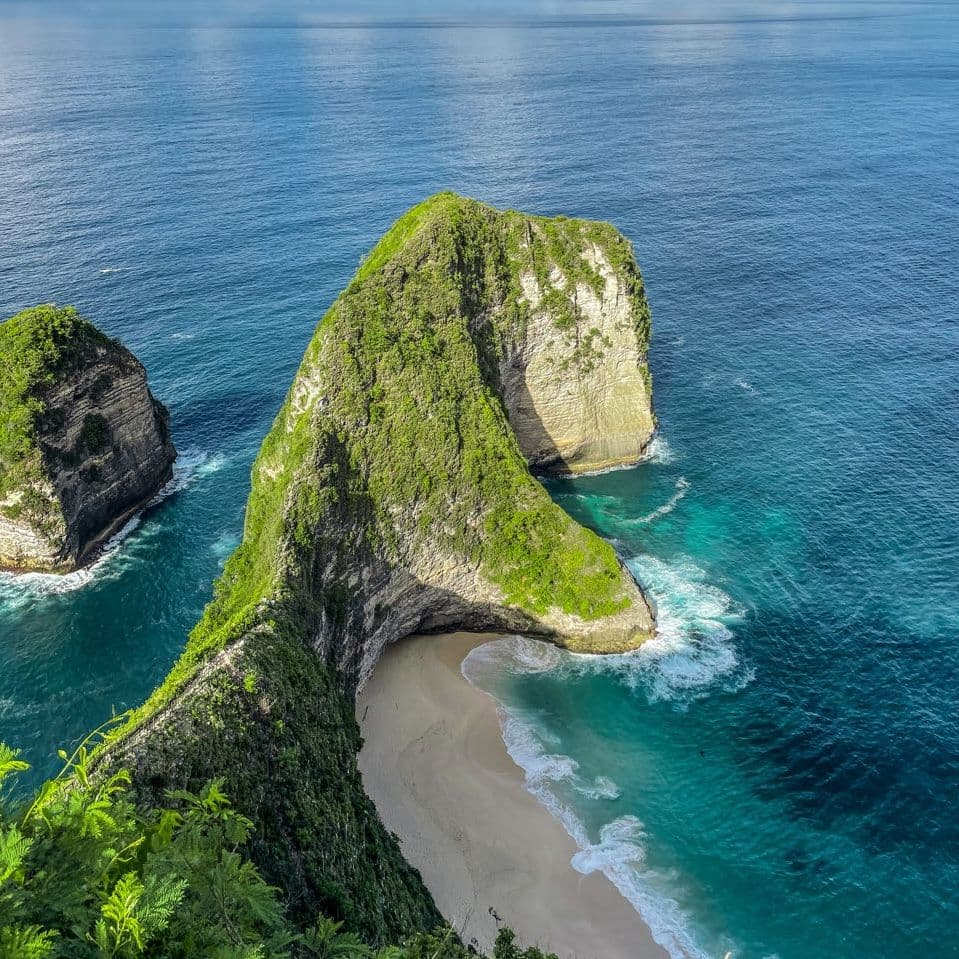
I wanted to have a proper holiday before getting back to working from the island. And that worked very well. The first two weeks of the trip I spent backpacking through Bali, Gili Trawangan, Lombok, and Nusa Penida. That gave me the freedom to fully enjoy the trip first, without having to work in between.
That structure made the second part of the trip much stronger. Instead of taking off a few days, followed by a few days of working, I split this trip in two clear parts: the holiday, and the work part. For the work part I returned to Bali, to work from a strong basis of accommodations in great locations without traveling around too much, which helped me focus on work, even though I was still on the island I was spending my holiday.
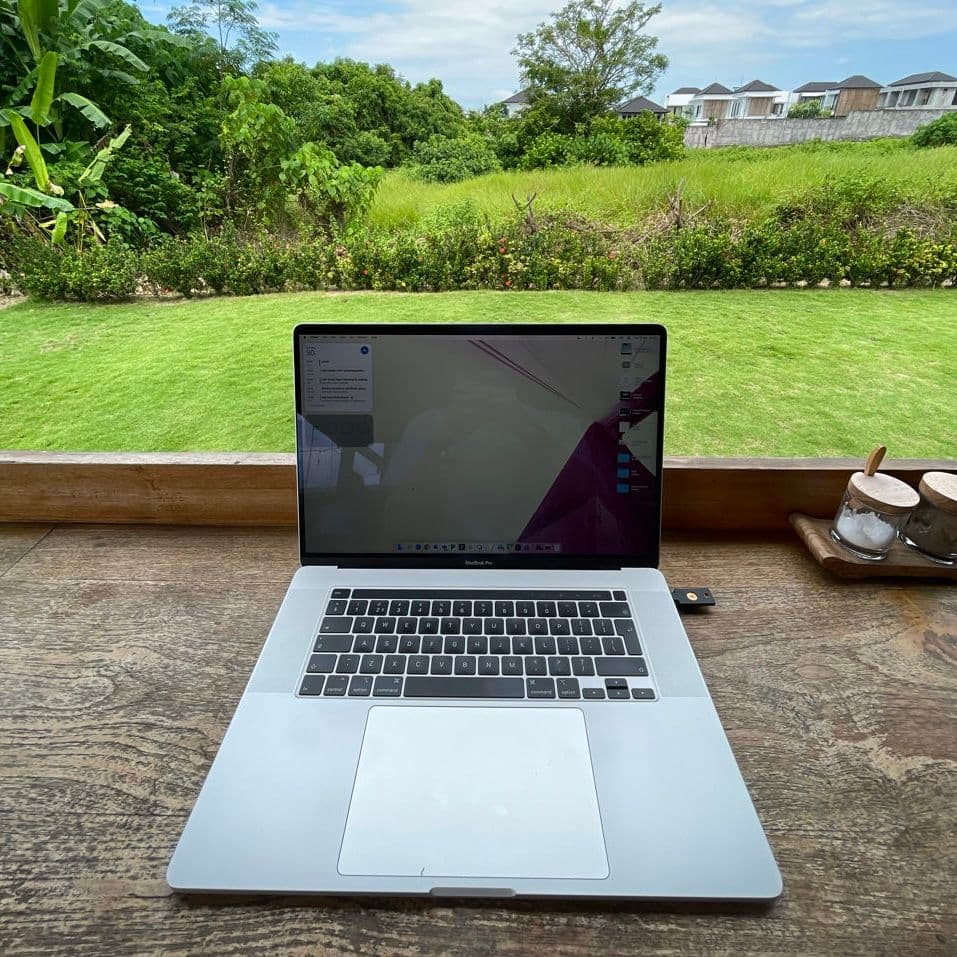
Returning to Bali after a holiday that also started on Bali felt like coming home. I already visited Ubud for several days during my holiday, so I was very excited to start my first week of working from there.
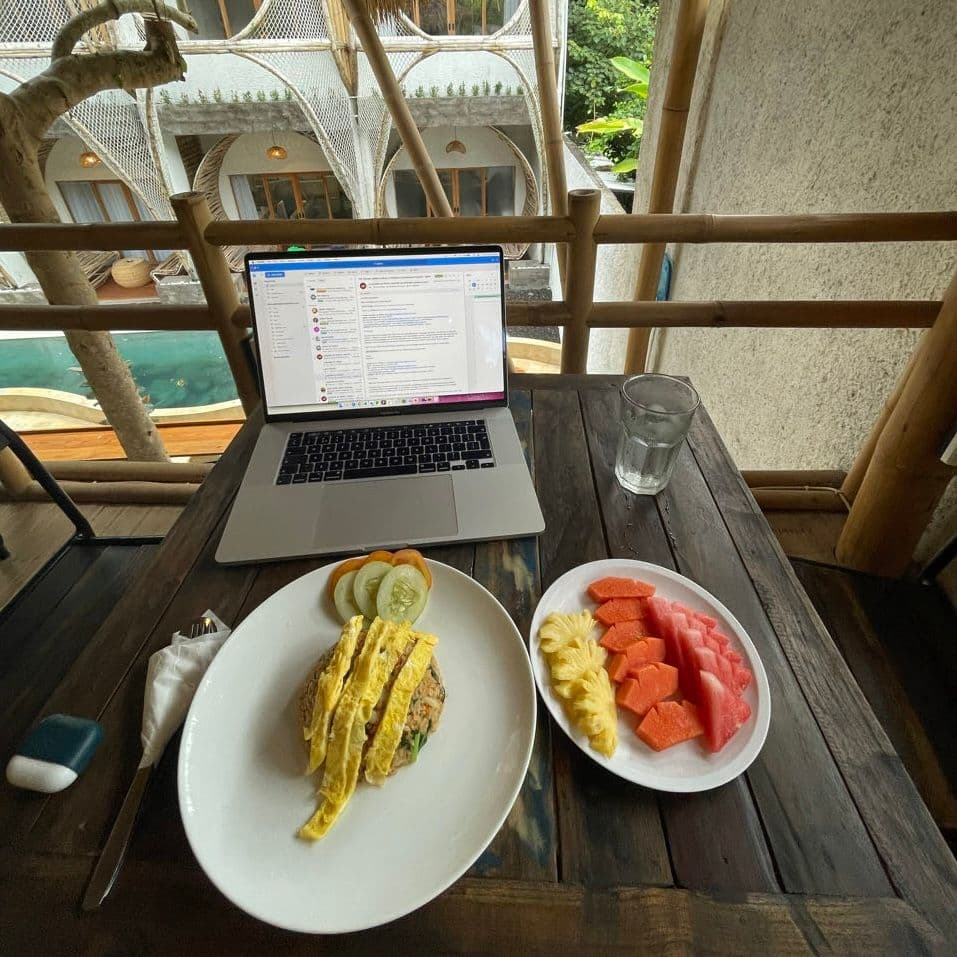
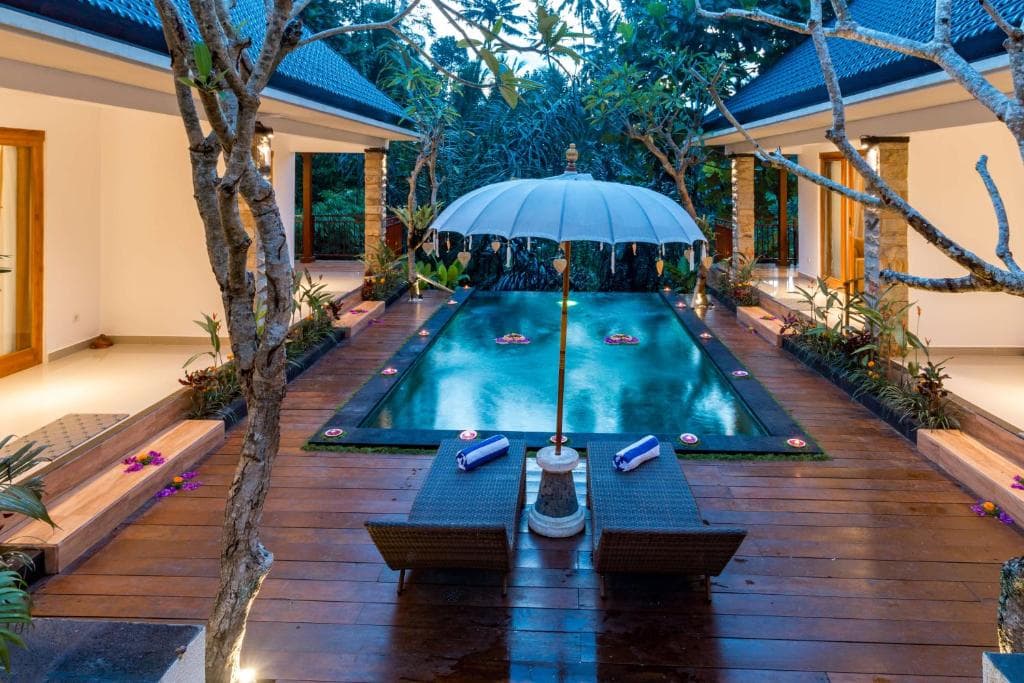
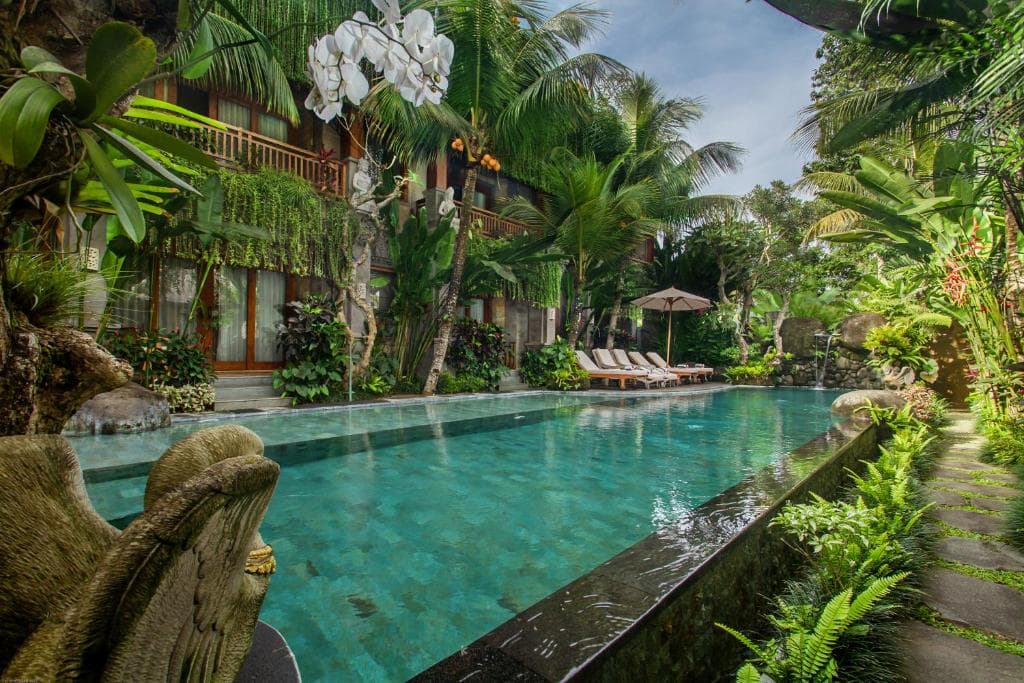
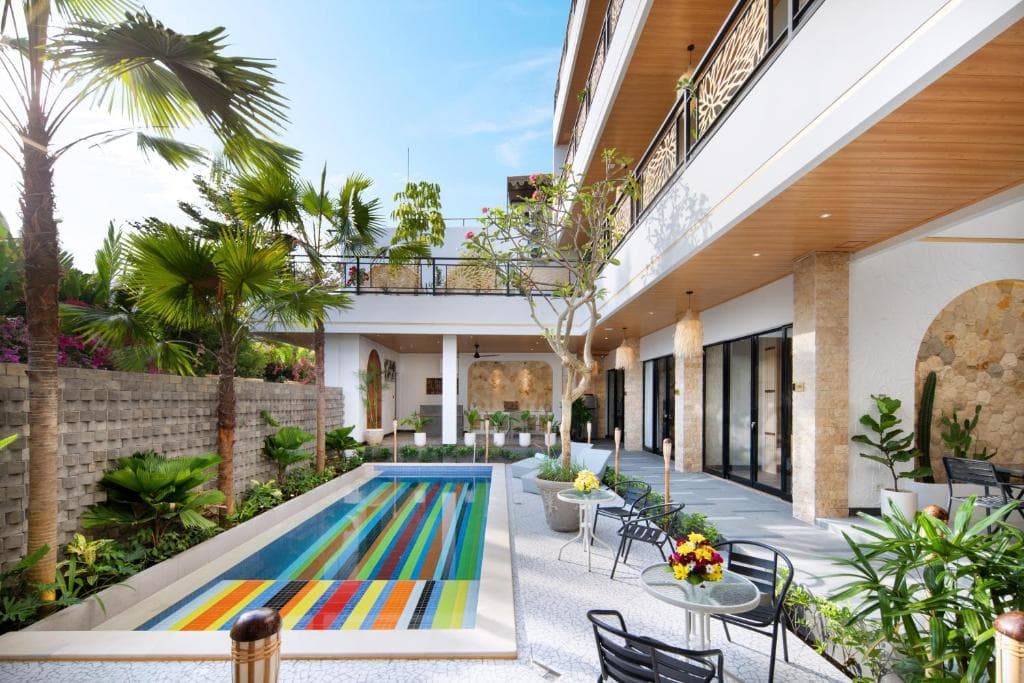
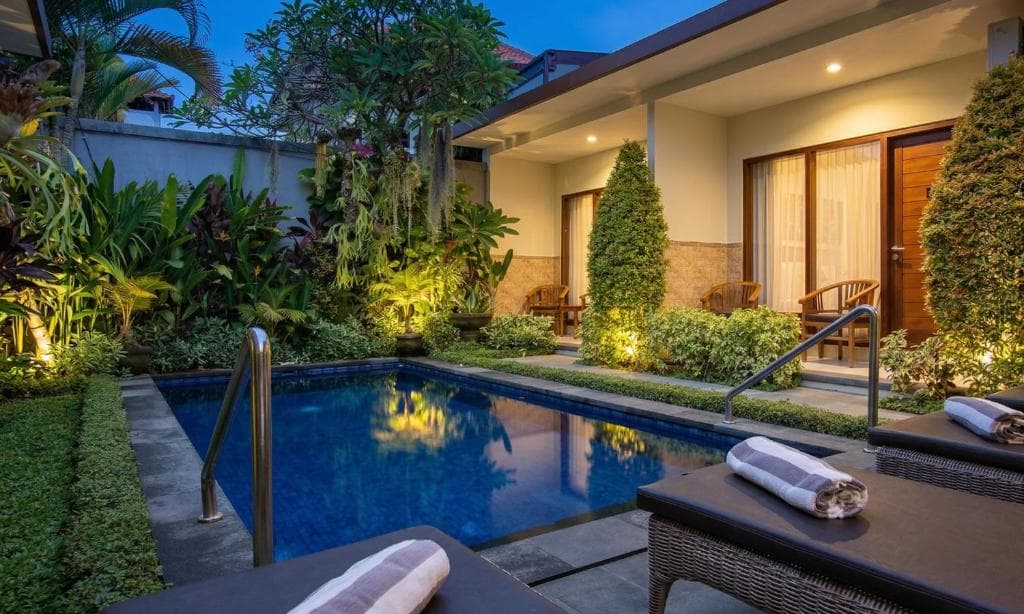
For my first work week, I was staying at Clan Living – The Founder in Ubud. A beautiful quiet hotel with a practical co-working space by the pool, and private rooms with desks and an actual office chair to get work done while having maximum privacy.
I did a lot of research before my Workation on accommodations in Bali, and this one stood out because it ticked all the boxes that I had on my list of requirements. Private room with a desk and proper chair, fast and secure internet, beautiful location to stay at with a pool, restaurant on-site, and walking distance from central Ubud.
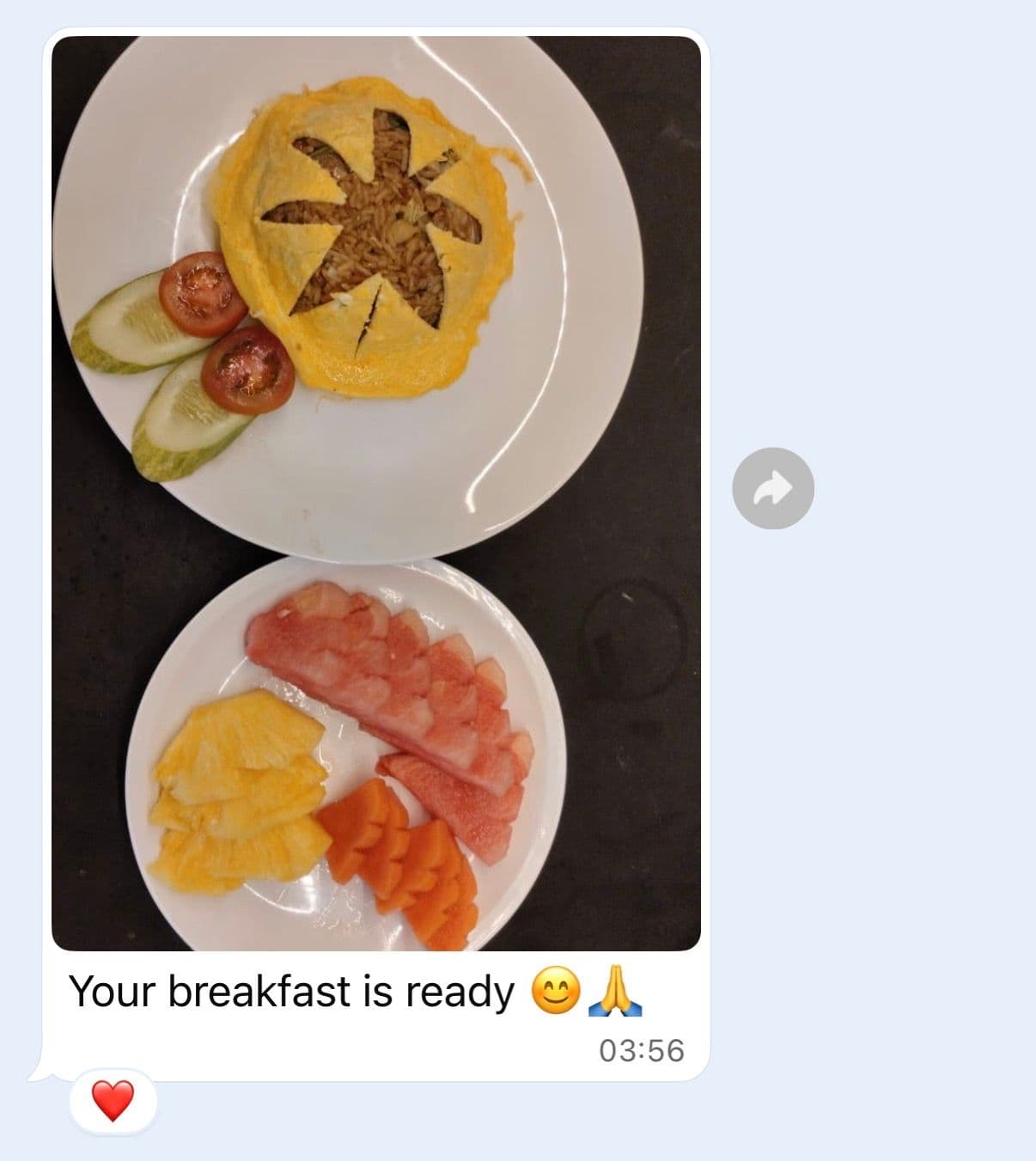
Every morning, the host of the hotel texted me at the time of my liking with a very welcoming message that my breakfast was ready, which made staying at Clan Living so much more personal. I felt at home here, and was actually a bit sad that I had to leave after spending a week here working in my cozy studio, or Bali Work From Home Office by now ;).
What made this stay work well was the combination of comfort, location, and the overall atmosphere of Ubud. Staying in central Ubud meant I had cafés, restaurants, and everything I needed close by, which made daily life feel very smooth. That matters a lot on a Workation. A good stay is not just about the room itself, but about how easy it is to live and work around it.
Before this trip, I read so many stories about how amazing Bali is for Digital Nomads, so my expectations were high. And yes, Bali quickly proved itself as a super practical workation destination. It was surprisingly easy to combine work with daily life on the island. I could still enjoy good breakfasts, go out for coffee, explore a bit during the day, and keep up with work without feeling like the trip had turned into a normal week at home.
That is what made this setup so attractive. Bali did not just feel like a beautiful place to work from. It felt practical. It felt flexible. And it felt easy to maintain for more than just a few days.
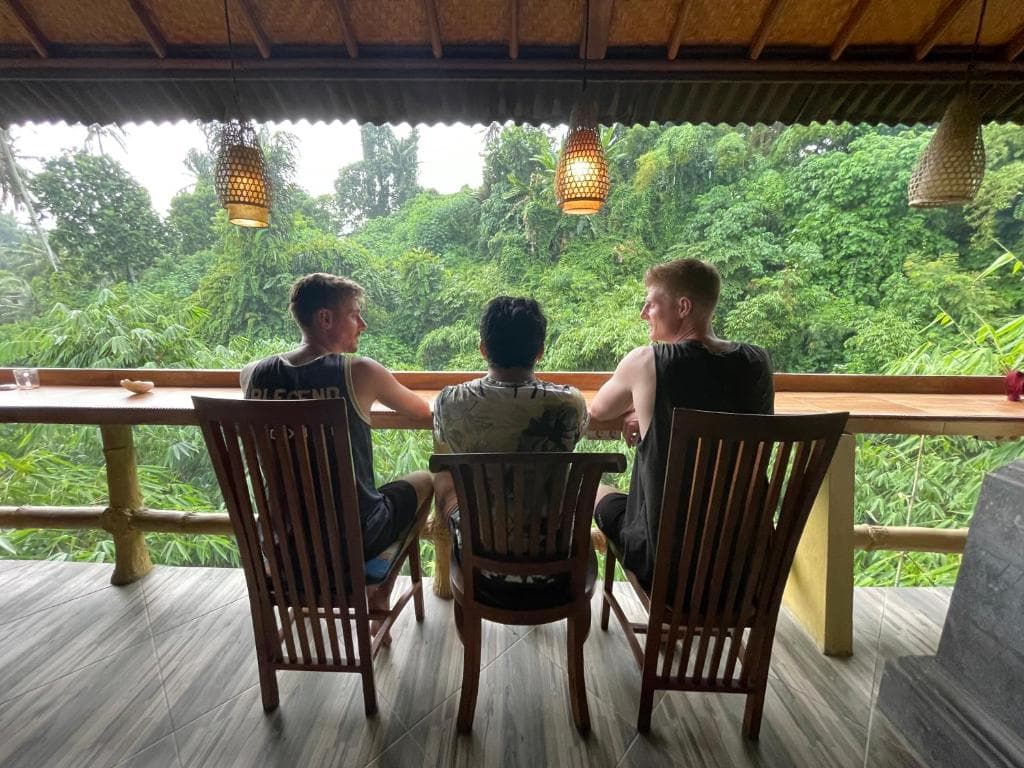
Ubud also felt like a very natural place to work remotely. It is lively enough to keep things interesting, but still calmer and more grounded than some of the busier coastal areas. That made it a great place to settle in, focus, and still feel like I was fully enjoying Bali around my workdays.
After a week of working in Ubud, I traveled to Canggu in the weekend. I was looking forward to a week of working close to the beach and was already counting down to my next cold coconut during breakfast while catching up on emails.
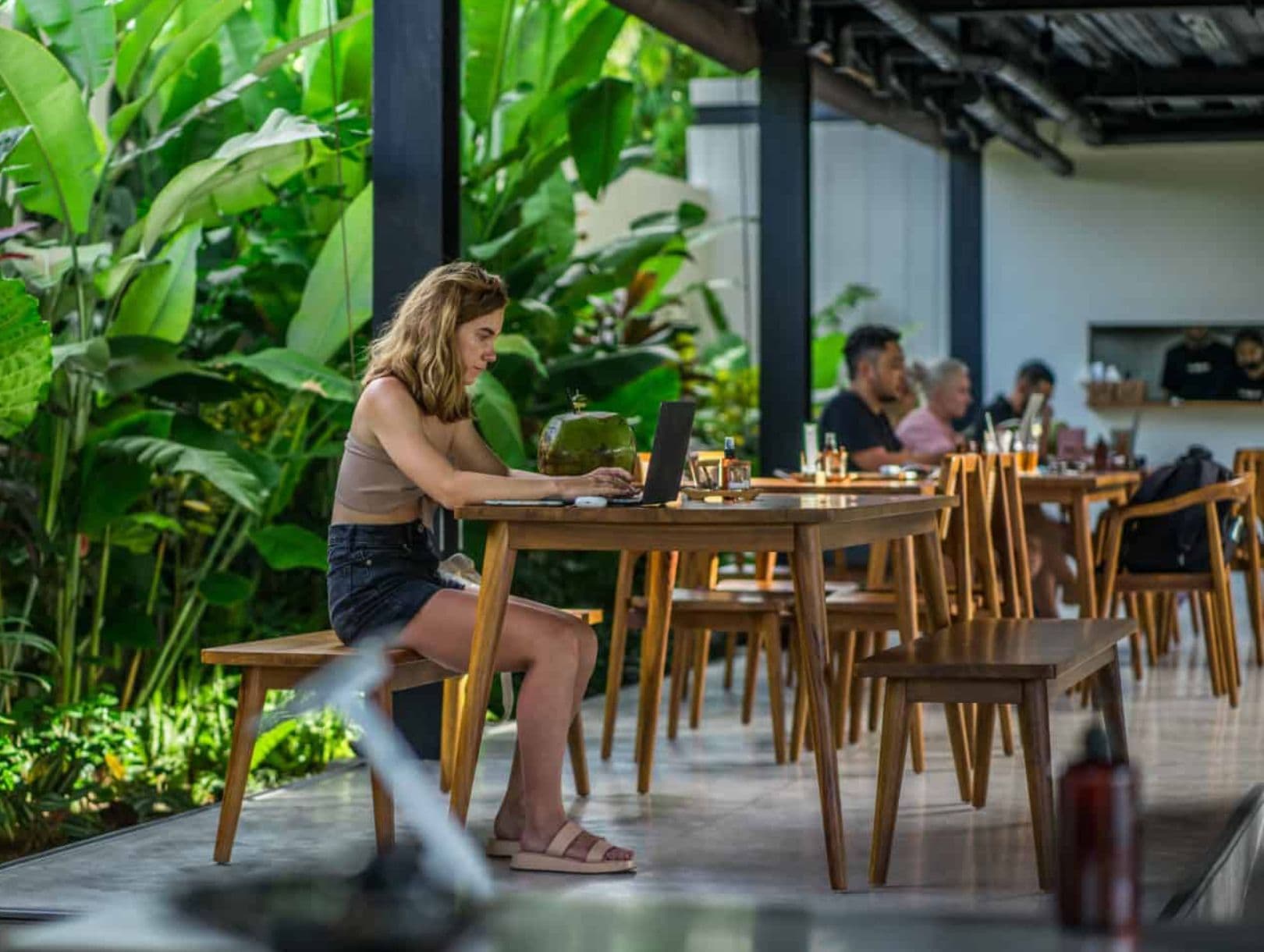
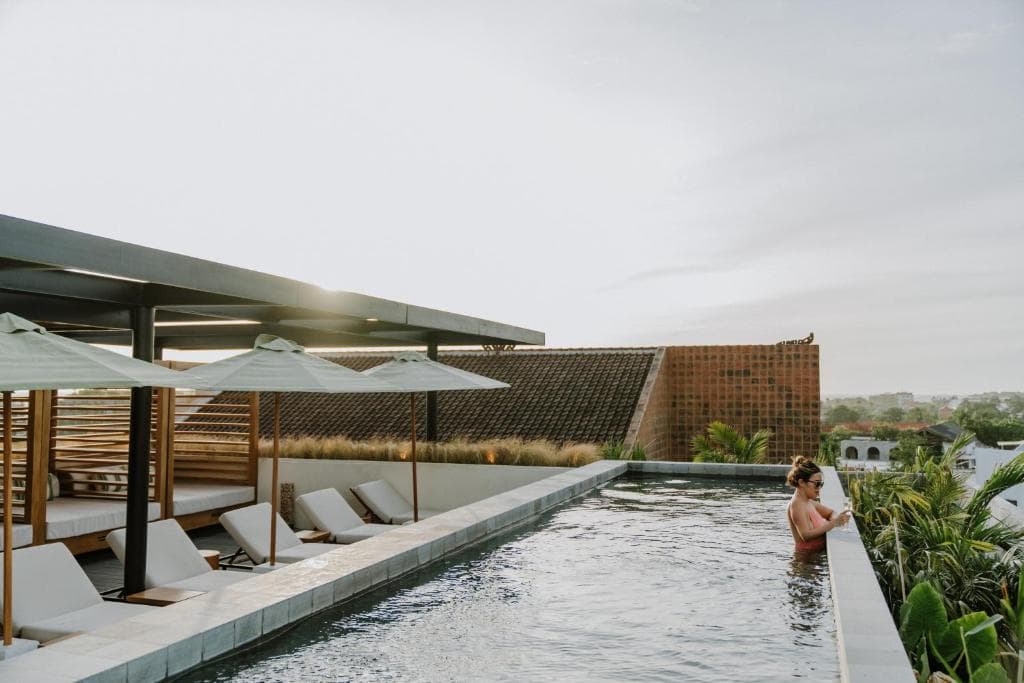
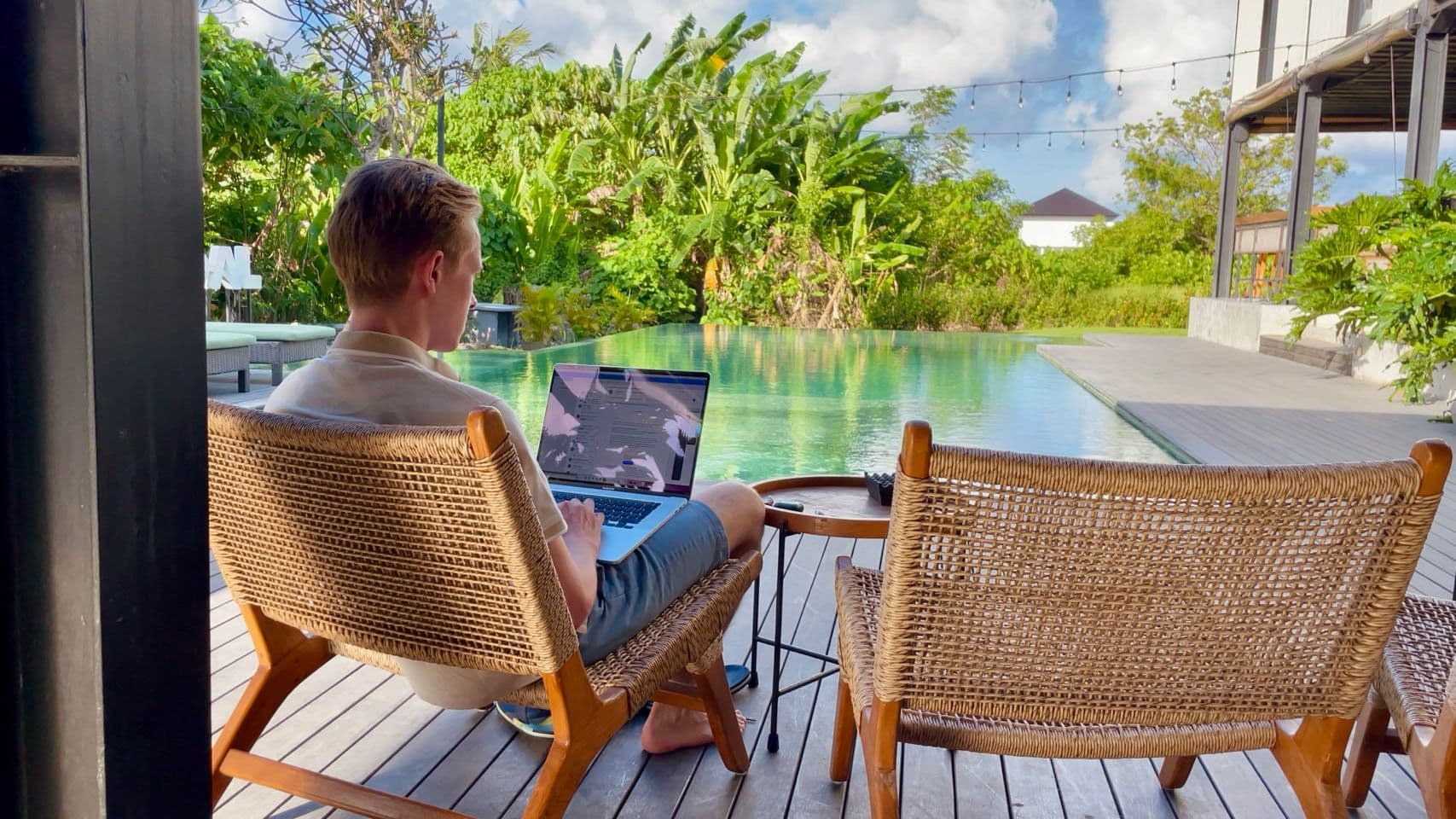
In Canggu, I checked into the best coworking hostel I've ever stayed in. Tribal Bali Coworking Hostel is not just any hostel; it's literally designed and tailored to Digital Nomads. Still up to this day I cannot name a hostel or hotel I stayed in that topped my experience at Tribal Bali.
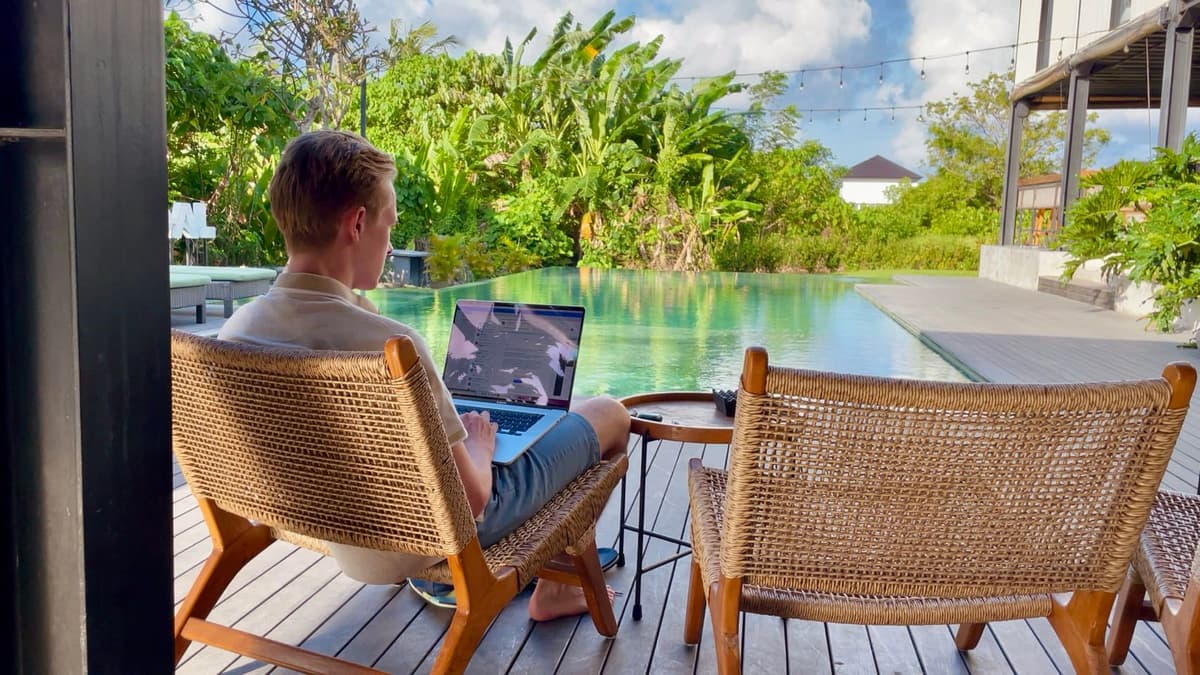
If you're planning a workation from Bali, and want to stay in Canggu, there is only one option to consider in my opinion. Tribal Bali Coworking Hostel is the best Workation Stay I have ever stayed at and is an absolute 10/10 for remote workers. Whether you're an employee at a corporate or a self-founded entrepreneur, Tribal Bali has all the ingredients for a stress free and comfortable workation.
• Coworking space with a lively open area and private areas for optimal socializing and privacy, whatever you desire
• Infinity pool
• Restaurant with local and international kitchen
• Private rooms, as well as dorms
• Easy access, a few hundred meters from the beach
• Fast internet across the entire premises
• Networking events organized by the Tribal Community
Staying at Tribal Bali Coworking Hostel made my Bali Workation one of the most memorable Workations I've ever done. I've been researching similar accommodations for my future Workations ever since, but none of them top Tribal Bali on convenience for Workations according to my strict requirements.
Thanks to Tribal Bali Coworking Hostel, my Workation in Bali was completely stress free. I could focus on work and got very inspired by the beautiful place I was working from. It felt like a place that already understood the needs of people who want to combine travel with work, and that removes a lot of friction from the experience.
The biggest reason that Bali worked so well for a Workation for me was that it is just practical. Bali is a beautiful island with endless places to explore, and it's so practically designed for remote workers. Working from Bali for this Workation convinced me that you can genuinely upgrade your daily life while still getting the work done you would be doing from home. Because Bali really felt like home after working there for a month.
That is what makes Bali so appealing for a workation. You are not just working abroad for the sake of working abroad. You are working from a place that actually makes the whole day feel better.
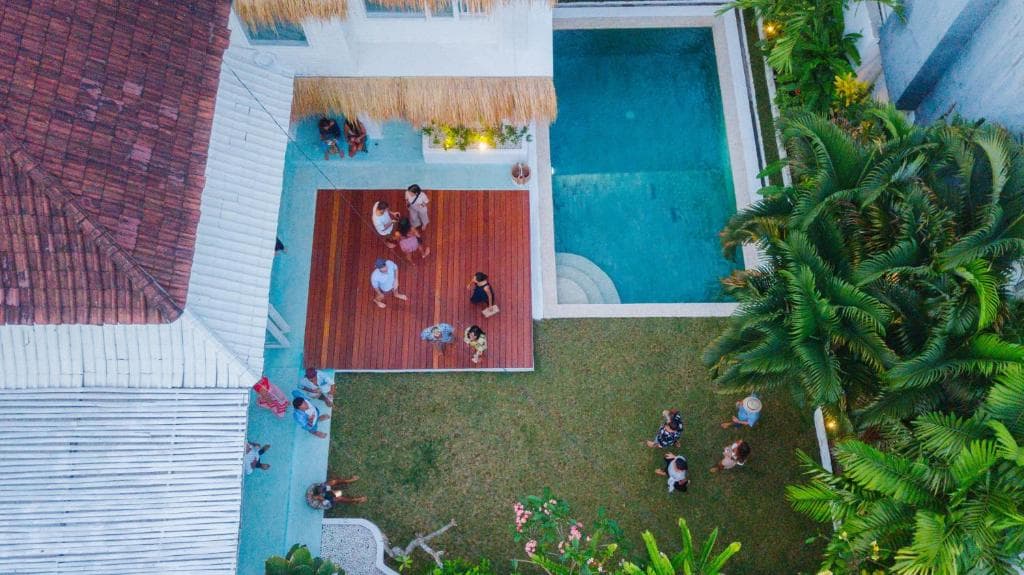
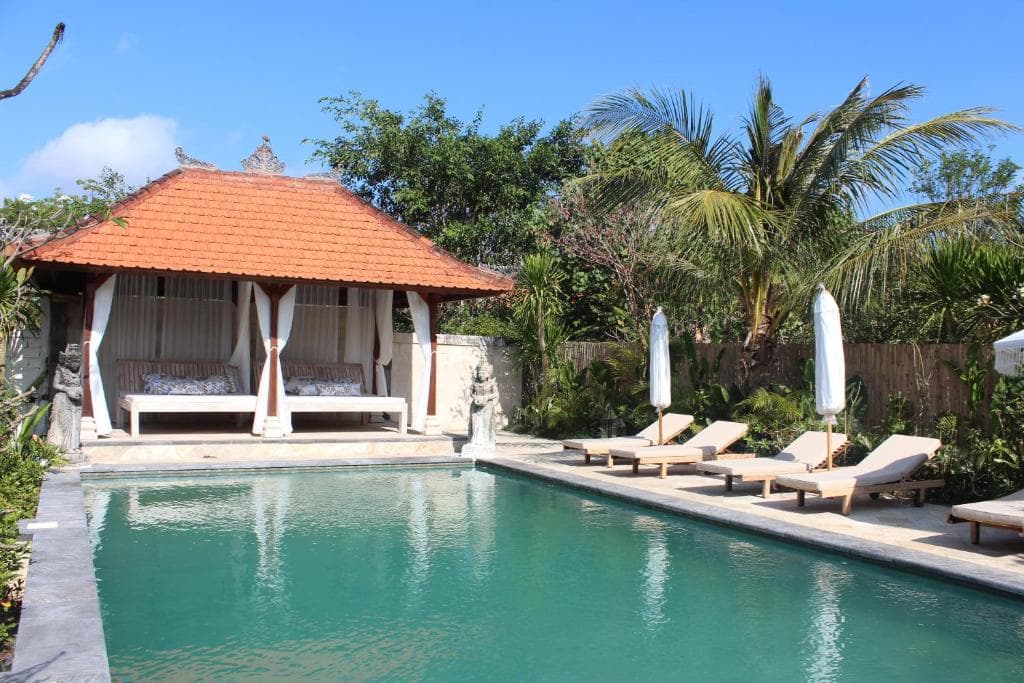
Besides the places I stayed at myself, these stays in Bali are well set up for remote work too, with a good desk and fast WiFi.
Internet in Indonesia is on average slower than in Thailand or Malaysia. In practice, the main remote work areas (Canggu, Ubud, Seminyak) are well served, with fast internet in most coworking spaces and newer stays. Rural villas and parts of the Bukit peninsula can be less reliable.
Always ask a stay for a recent speed test, and keep mobile data as a backup. An eSIM gets you online as soon as you land. Read my guide to eSIMs for workations.
A rough week for one person, excluding flights:
Stay
€250–€650
For a private room or small villa with a desk
Food
€70–€160
Coworking
€35–€65
For five day passes, unless your stay includes a workspace
Transport
€20–€60
On Grab, Gojek, drivers or a scooter
Also budget for
With a seven-hour difference in European winter (six in summer), your mornings are free and the European workday starts in your afternoon.
Apr–Jun
Dry, green and not yet peak season, a great time for a workation
Jul–Aug
Dry and busiest; book early
Sep–Oct
Still dry, fewer crowds
Nov–Mar
Rainy season with heavy afternoon showers, quieter and cheaper
Nyepi (Day of Silence), usually in March
The island shuts down for 24 hours, including the airport
Bali's international airport is Ngurah Rai in Denpasar, with connections through the big Asian and Gulf hubs. Traffic around the airport, Canggu and Seminyak can be slow, so plan transfers outside rush hour.
Grab and Gojek are cheap and easy, although some areas restrict app pick-ups. Private drivers are affordable for day trips and transfers between areas. If you rent a scooter, you need a motorcycle licence and an international driving permit with the motorcycle category; police checks are common.
EU citizens can get a 30-day visa on arrival or e-VOA (IDR 500,000), extendable once for 30 days. Bali charges a separate tourism levy of IDR 150,000 per visit, and all travellers must submit the free All Indonesia arrival card within three days before arrival.
Visitor visas do not allow local employment, and remote work on them is a grey area. For longer stays, look into the remote worker visa (E33G).
Watch the sunset at Uluwatu Temple or a Canggu beach club
Hike Mount Batur for sunrise on a weekend
Walk the Campuhan Ridge in Ubud
Take the fast boat to Nusa Penida or the Gili Islands, as I did during my holiday
Take a surf lesson in Canggu
Yes. With the right stay and reliable internet, it is one of the easiest long-haul workation destinations.
Ubud for calm and focus, Canggu for beach and community. I worked a week in each.
Thirty days on a visa on arrival or e-VOA, extendable once by 30 days.
Seven hours ahead in European winter, six in European summer, so the European workday lands in your afternoon and evening.
I would split them: holiday first, then work. It made both parts of my trip stronger.
In summary, Bali completely lived up to the image I had in mind of a dream workation destination. By starting with a proper holiday first and then settling into two weeks of remote work from Ubud and Canggu, I got the best of both worlds: adventure, relaxation, and a surprisingly smooth way to keep up with my job from abroad. With the right stays, reliable internet, and a bit of planning, Bali did not just feel like a beautiful island to visit, but like a place that genuinely made working remotely more enjoyable. If you are thinking about doing a workation in Bali yourself, I can honestly say: it is absolutely worth it.
Dive deeper with my Ubud and Canggu guides, read my Bali trip report, or compare Bali with Thailand. For more destinations in the region, see my Southeast Asia workation guide.